Table of Contents
- Where It Happened: Understanding the Langtang–Helambu Route
- What Happened That Day in October 2025
- Why the River Looked Safe (But wasn’t)
- Mountain Rivers Rise Faster Than You Think
- The Post-Monsoon Trap
- The Most Underestimated Danger in Himalayan Trekking
- Could This Have Been Prevented?
- Weather Awareness Mistakes
- Group Decision Errors
- Absence of Local Knowledge
- What Trekkers Should Do When Facing a River Crossing
- Signs a River Is Too Dangerous
- Safer River Crossing Tips
- The Role of Guides in Preventing Such Accidents
- Langtang Trek Safety Tips
- Frequently Asked Questions (FAQs)
They Thought the River Was Safe: A Langtang Trek Gone Wrong
10/01/2026
The trail was familiar. The air felt fresh. The river looked
calm, nothing out of the ordinary. For many trekkers, this is exactly how a
typical day in Langtang or Helambu begins. But in October 2025, that sense of
normalcy turned into tragedy when a sudden surge in the Bering Khola swept away
four young trekkers.
This incident shocked the trekking community in Nepal and
raised an uncomfortable question: how can a seemingly harmless river become
deadly within minutes? This article breaks down what really happened, why
it matters to both Nepali and international trekkers, and what lessons every
trekker must take seriously before stepping into the mountains.
Where It Happened: Understanding the Langtang–Helambu Route
The Langtang–Helambu region, located north of Kathmandu, is
often marketed as a relatively easy and accessible trekking destination. Many
trekkers choose this route because it offers dramatic Himalayan scenery, rich
Tamang culture, and lower crowd levels compared to Everest or Annapurna.
Because the highest points stay below extreme altitudes and
trails are well-established, people often underestimate the risks here.
However, this region is crossed by multiple rivers and streams fed by glaciers,
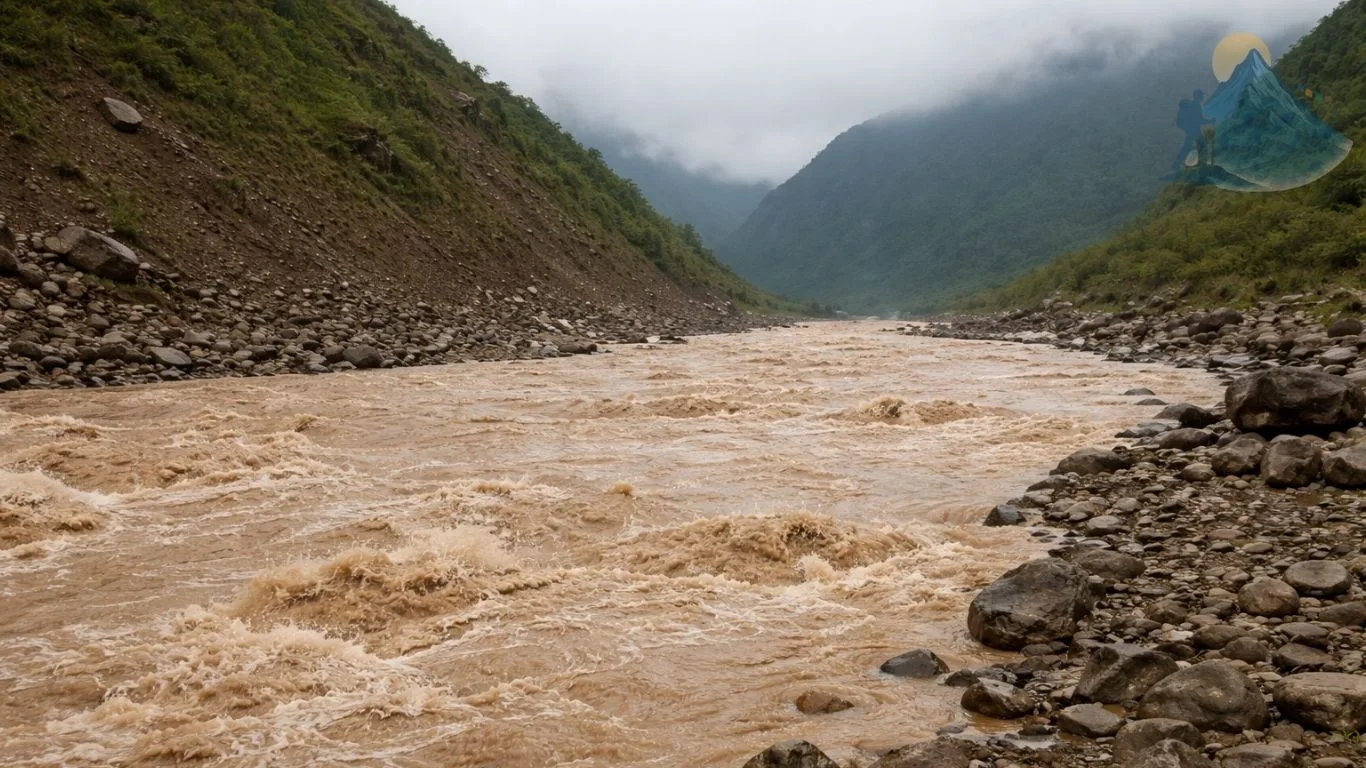
rainfall, and upstream runoff. One of them is the Bering Khola, a
mountain river that can look shallow and manageable during dry conditions.
That perception is exactly what makes these crossings
dangerous.
What Happened That Day in October 2025
In early October 2025, a group of 16 trekkers from Bhaktapur
was heading toward Langtang via the Helambu side. Continuous rainfall had
affected the area for days. While the rain didn’t look extreme at the crossing
point, it had already intensified upstream.
As the group attempted to cross Bering Khola in Gosainkunda
Rural Municipality–4, the water level suddenly surged. Within moments, four
trekkers, two men and two women in their 20s, were swept away by the current.
Rescue teams from the Nepal Army, Police, and Armed Police
Force later managed to bring the remaining 12 trekkers to safety. Despite
search operations, the incident highlighted a brutal reality: mountain
rivers don’t give warnings.
Why the River Looked Safe (But wasn’t)
Mountain Rivers Rise Faster Than You Think
Unlike rivers in plains, Himalayan rivers respond almost
instantly to rainfall. Heavy rain upstream, sometimes hours away, can
dramatically increase water volume downstream. This means a river that looks
ankle-deep in the morning can become chest-deep by afternoon.
Bering Khola is a classic example. Its narrow channel, steep
gradient, and debris-filled flow allow water to gain speed rapidly. Once the
current strengthens, even experienced trekkers struggle to maintain balance.
The Post-Monsoon Trap
October is considered peak trekking season in Nepal. Skies
often clear, temperatures feel comfortable, and trails reopen after the monsoon.
But this transition period is deceptive.
The ground remains saturated, rivers stay volatile, and
late-season rainfall is common. Many trekking accidents in Nepal happen after
the monsoon, not during it, precisely because people let their guard down.
The Most Underestimated Danger in Himalayan Trekking
Ask most trekkers about risks in Nepal, and they’ll mention
altitude sickness first. While altitude is serious, river crossings silently
cause some of the most fatal trekking accidents.
Why?
- Water
hides depth and force
- Slippery
rocks reduce footing
- Debris
can knock trekkers off balance
- Cold
water weakens muscles instantly
In Langtang and Helambu, rivers are unavoidable. The danger
isn’t crossing them, it’s crossing them at the wrong time.
Could This Have Been Prevented?
Weather Awareness Mistakes
One of the biggest issues was ignoring continuous rainfall
patterns. Even if it’s not raining at the crossing point, rain upstream matters
more. Many trekkers don’t track multi-day weather trends, which is crucial in
river-heavy regions.
Group Decision Errors
In groups, people often hesitate to speak up. If one or two
members think the crossing is unsafe but others push forward, bad decisions
happen. Rivers demand conservative choices; turning back is not failure.
Absence of Local Knowledge
Local guides and villagers understand river behavior
instinctively. They notice subtle changes in sound, color, and speed. Without
this experience, trekkers rely only on visual judgment, which is often
misleading.
What Trekkers Should Do When Facing a River Crossing
Signs a River Is Too Dangerous
- Murky
brown or grey water
- Loud
roaring sound
- Floating
debris like branches or stones
- Rapid
increase in water level
- Cold
water numbs feet instantly
If you notice even two of these signs, do not cross.
Safer River Crossing Tips
- Cross
early in the morning when water levels are lowest
- Unbuckle
backpack straps for quick release
- Use
trekking poles for balance
- Cross
as a group only if conditions are stable
- Never
cross after heavy overnight rain
Sometimes, the safest option is waiting or turning back.
The Role of Guides in Preventing Such Accidents
Since 2023, Nepal has made licensed guides mandatory for
most trekking regions, including Langtang and Helambu. This decision wasn’t
about control; it was about survival.
Guides assess:
- Weather
patterns beyond forecasts
- River
behavior based on sound and flow
- Alternative
crossings or waiting times
- Emergency
decision-making under pressure
Many fatal accidents in Nepal involve independent trekkers
making judgment calls without local context.
Langtang Trek Safety Tips
- Avoid
river crossings during or immediately after heavy rain
- Choose
spring (March–May) or stable autumn windows
- Always
carry buffer days in your itinerary
- Monitor
local news and weather updates
- Invest
in insurance that covers helicopter evacuation
- Respect
“easy trek” labels; they don’t mean low risk
Langtang remains a beautiful and rewarding trek, but only when approached with respect for nature.
Frequently Asked Questions (FAQs)
Q: Is the Langtang trek safe for beginners?
A: Yes, but only with proper planning, a licensed guide, and awareness of weather and river conditions.
Q: Is October a dangerous time to trek in Langtang?
A: October is popular, but early October can still carry post-monsoon risks, especially river flooding.
Q: Do I really need a guide for the Langtang trek?
A: Yes. Guides significantly reduce risks related to weather, river crossings, and emergencies.
Q: What is the biggest danger while trekking in Langtang?
A: River crossings and weather-related hazards cause more accidents than altitude in this region.
Q: Can river levels change even if it’s not raining?
A: Absolutely. Rain upstream can affect rivers hours later without visible warning signs.