
Table of Contents
Walking Back in Time: Life and Culture Along the Lower Dolpo Trek
28/12/2025
There are places in the Himalayas where time feels fast, buzzing
trails, crowded teahouses, and constant movement of people. Then there is Lower
Dolpo, where time seems to stand still. It simply flows, slowly and quietly,
shaped by mountains, seasons, and traditions that have remained unchanged for
generations.
The lower Dolpo trek is not just about reaching a destination. Instead,
it's about entering a world where life still follows ancient rhythms, where culture
isn’t preserved only for tourists. In fact, they lived naturally every day.
From a remote stone village to sacred lakes and centuries-old beliefs, trekking
through Lower Dolpo truly feels like walking back in time.
Where Is
Lower Dolpo and Why It Still Feels Untouched
Lower Dolpo lies in western Nepal, within the vast landscapes of Shey Phoksundo National Park, mainly in the Dolpa District. Geographically, it sits north of the Dhaulagiri range and close to the Tibetan plateau. Because of this location, Dolpo falls in a rain-shadow region, receiving far less monsoon rain than much of Nepal.
More importantly, Lower Dolpo has remained isolated by design and
by nature. There are no roads connecting its villages to the rest of the
country. Access is limited to small flights to Juphal, followed by days of
trekking through deep valleys and high passes. As a result, modernization
arrived late and only lightly.
This isolation is exactly why the remote villages of the Nepal
Himalayas, found in Lower Dolpo, still feel untouched. Without mass tourism
or infrastructure pressure, the region has protected both its environment and
its way of life.
Life in Lower
Dolpo: A Rhythm Set by Mountains
Life in Lower Dolpo moves at the pace of nature. People wake with
the sun, work with the seasons, and rest when the mountains demand it. There’s
no rush, no artificial schedule, only a rhythm shaped by altitude, weather, and
tradition.
Most families here depend on yak herding, barley farming, and small-scale
trade. Fields are planted in a short summer window, while yaks are moved across
alpine pastures following ancient migration routes. Homes are built from stone
and mud, designed to survive harsh winters and strong winds.
As you walk through villages, you’ll notice prayer flags
fluttering above rooftops, mani walls carved with mantras, and locals greeting
trekkers with quiet curiosity. This is everyday life in Lower Dolpo: simple,
resilient, and deeply connected to the land.
Bon Religion
and Tibetan Buddhism in Lower Dolpo
One of the most fascinating aspects of Lower Dolpo is its
spiritual depth. The region is one of the few places in Nepal where the Bon
religion, a pre-Buddhist belief system, is still widely practiced.
Bon focuses on harmony with nature, spirits of the land, and
ancestral traditions. Alongside Bon, Tibetan Buddhism also plays a major
role in daily life. Rather than competing, the two belief systems coexist
peacefully, shaping rituals, festivals, and community values.
Monasteries, chortens, and sacred sites appear throughout the
trek. Prayer wheels spin in village corners, and rituals are woven naturally
into daily routines. Even concepts like sky burial reflect deeply rooted
beliefs about life, death, and the cycle of existence.
This spiritual balance is a defining feature of Tibetan culture
in Dolpo and one of the reasons the region feels so culturally rich and
authentic.
Phoksundo
Lake: Sacred Water in a Silent Landscape
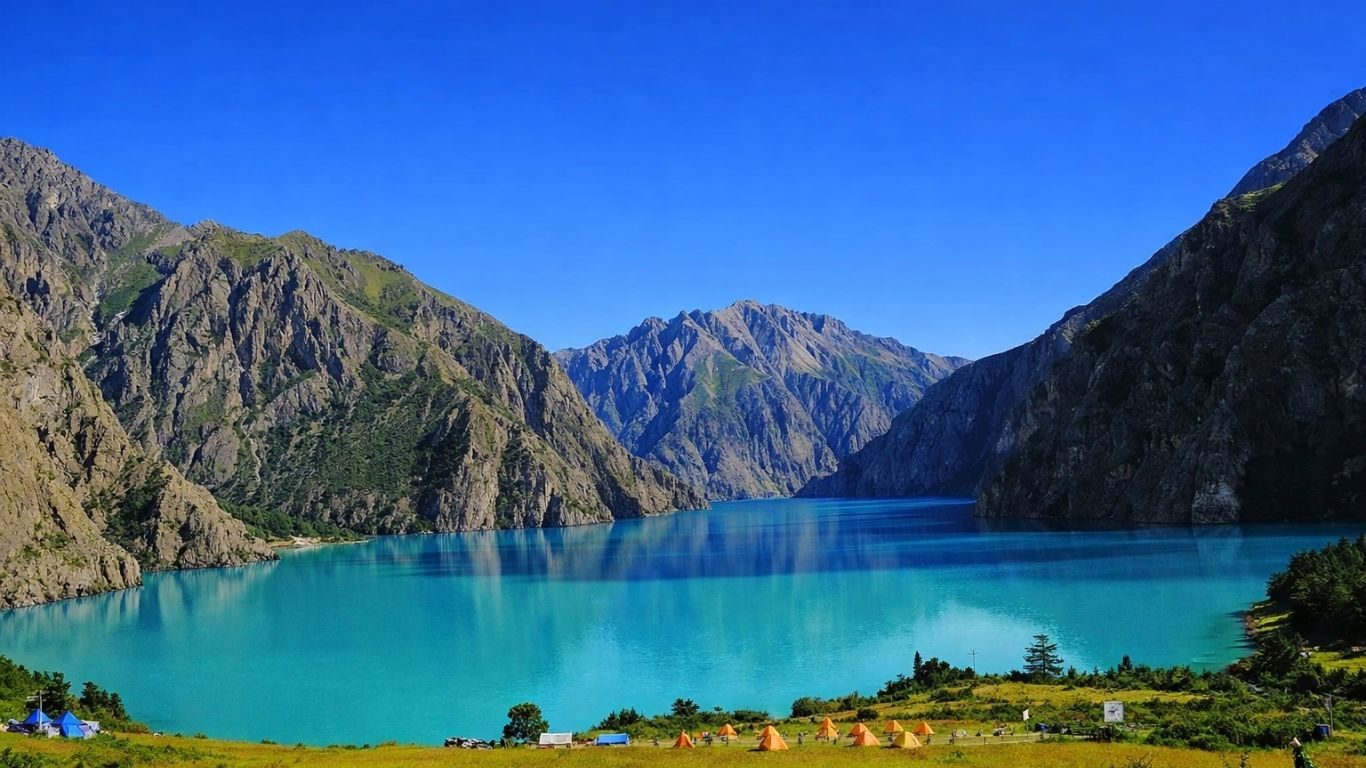
Few places on the trek feel as breathtaking as Phoksundo Lake (Shey Phoksundo).
Sitting at around 3,611 meters, this deep turquoise lake feels almost unreal,
not just because of its color, but because of the silence surrounding it.
For local communities, Phoksundo Lake is sacred. According to Bon
beliefs, the lake is protected by spirits, and fishing is forbidden. Nearby Ringmo
village sits quietly above the shoreline, where stone houses blend
perfectly into the landscape.
Beyond its beauty, Phoksundo represents balance between humans and
nature, belief and survival. This spiritual connection makes Phoksundo Lake
culture an essential part of understanding Lower Dolpo, not just a scenic
highlight.
Ancient
Trails and Yak Caravans of the Hidden Kingdom
Long before trekking routes existed, these trails were used for
survival. Lower Dolpo was once part of important salt trade routes between
Tibet and Nepal, and yak caravans were the backbone of regional commerce.
Even today, yaks remain essential. They carry goods, provide milk
and meat, and symbolize resilience in harsh environments. Walking alongside
these ancient paths, it becomes clear why Dolpo earned its reputation as the hidden
kingdom of Dolpo, a place shaped by trade, isolation, and endurance.
These trails aren’t just routes through mountains; they are living
history, still used by locals long after traders disappeared.
The Cost of
Trekking Lower Dolpo
Lower Dolpo is one of the more expensive treks in Nepal, and for
good reason.
The total cost typically ranges between USD 3,500 to 5,500+ per
person, depending on group size and duration. The cost may go higher than that if you go for a luxurious trek. This includes restricted
area permits, national park fees, licensed guides, porters, camping equipment,
food supplies, and remote flights.
However, the cost plays an important role. It limits mass tourism,
reduces environmental pressure, and ensures that trekking supports local
livelihoods responsibly. In many ways, the Lower Dolpo trek is part of
what has protected the region’s culture and wilderness.
Here, expense equals preservation, not luxury.
Altitude and
Endurance: The Physical Reality of Lower Dolpo
Lower Dolpo is physically demanding, but not technical. What makes
it challenging is altitude, duration, and isolation.
Key altitude points include:
- Juphal
(starting point): ~2,475m
- Phoksundo
Lake: ~3,611m
- Numa
La Pass: ~5,190m
- Baga
La Pass: ~5,070m
Crossing two passes above 5,000 meters requires patience
and proper acclimatization. Trails often involve loose scree (small, unstable
stones underfoot), long ascents, and cold mornings.
Still, the trek rewards steady pacing rather than speed. Mental
endurance matters just as much as physical fitness when trekking at the altitude
of the Lower Dolpo trek.
Best Season
to Experience Life and Culture in Lower Dolpo
Timing makes a big difference in Dolpo.
- Spring (April–June) brings mild temperatures and active
village life. Fields are prepared, animals move to higher pastures, and the
landscape slowly comes alive.
- Autumn (September–October) offers crisp air, clear mountain
views, and stable weather ideal for photography and cultural observation.
- Interestingly, summer (July–August) is also a hidden gem.
Because Dolpo lies in a rain-shadow zone, monsoon impact is minimal, making
this season surprisingly suitable for trekking.
- Winter, however, is generally avoided due to heavy
snow, extreme cold, and closed passes.
Choosing the best season for the Lower Dolpo trek depends on whether you value comfort, solitude, or cultural immersion. If you’re planning to experience Lower Dolpo your own way, Nepal Boundary Trekking Agency Pvt. Ltd. is a great choice, offering fully customized itineraries, experienced local guides, and flexible planning based on your pace, interests, and comfort level.
Frequently Asked Questions (FAQs)
Q: What makes the Lower Dolpo trek different from other treks in Nepal?
A: Lower Dolpo feels different because it remains deeply isolated and culturally untouched. There are no roads, very few trekkers, and villages still follow ancient traditions. Life here moves according to seasons, not tourism, which makes the trek feel like stepping into another time.
Q: Where exactly is Lower Dolpo located?
A: Lower Dolpo lies in western Nepal, inside Shey Phoksundo National Park in the Dolpa District. It sits north of the Dhaulagiri range and close to the Tibetan plateau, which places it in a rain-shadow region with less monsoon rainfall.
Q: Why is Lower Dolpo called a “hidden kingdom”?
A: Lower Dolpo earned this name due to its long isolation and ancient trade routes. For centuries, yak caravans carried salt and goods between Tibet and Nepal through these valleys. Even today, many trails and traditions remain unchanged, keeping the region hidden from modern influence.
Q: Is Lower Dolpo a culturally rich trekking destination?
A: Yes, Lower Dolpo is one of the most culturally rich trekking regions in Nepal. The area preserves Bon religion alongside Tibetan Buddhism, with monasteries, prayer flags, mani walls, and sacred rituals forming part of daily life rather than tourist attractions.
Q: What role does Bon religion play in Lower Dolpo?
A: Bon is a pre-Buddhist belief system that focuses on harmony with nature and spiritual balance. In Lower Dolpo, Bon coexists peacefully with Tibetan Buddhism and influences rituals, festivals, sacred sites, and even daily activities like farming and herding.
Q: Why is Phoksundo Lake considered sacred?
A: Phoksundo Lake holds deep spiritual importance for local communities. According to Bon beliefs, spirits protect the lake, which is why fishing is forbidden. The lake represents balance between nature, belief, and survival, not just scenic beauty.
Q: How difficult is the Lower Dolpo trek?
A: Lower Dolpo is physically demanding but not technical. The challenge comes from long trekking days, high altitude, remote conditions, and crossing passes above 5,000 meters. Mental endurance and steady pacing matter as much as physical fitness.
Q: What is the highest altitude reached during the trek?
A: The trek crosses two high passes: Numa La Pass at around 5,190 meters and Baga La Pass at around 5,070 meters. Proper acclimatization is essential to handle these elevations safely.
Q: Why is the Lower Dolpo trek expensive?
A: Lower Dolpo trekking costs are high due to restricted area permits, remote flights, camping logistics, guides, porters, and food supplies carried for many days. The cost also helps limit mass tourism and protects the region’s culture and environment.
Q: What is the best time to experience Lower Dolpo culture?
A: Spring and autumn offer the best balance of weather, visibility, and village activity. Summer is also surprisingly suitable due to minimal monsoon impact. Winter is generally avoided because heavy snow closes passes and villages become inaccessible.
Q: Are teahouses available on the Lower Dolpo trek?
A: Lower Dolpo is primarily a camping trek. Most villages do not have standard teahouses like other popular regions, which adds to the remote and authentic nature of the journey.
Q: Is the Lower Dolpo trek suitable for everyone?
A: This trek suits experienced trekkers who are comfortable with long durations, isolation, and basic facilities. It’s ideal for those seeking cultural depth, wilderness, and a slower, more meaningful Himalayan experience.