
Table of Contents
- Local guides understand the trail beyond what maps can tell you
- Local guides help you move more safely at high altitude
- A guide makes the cultural side of trekking much richer
- Local guides solve problems before they become stressful
- They help you use your energy better each day
- Local guides know viewpoints many people walk past
- Trekking feels mentally lighter when somebody knows the route well
- Local Guide vs Trekking Alone
- How to choose the right local guide in Nepal
- Frequently Asked Questions (FAQs)
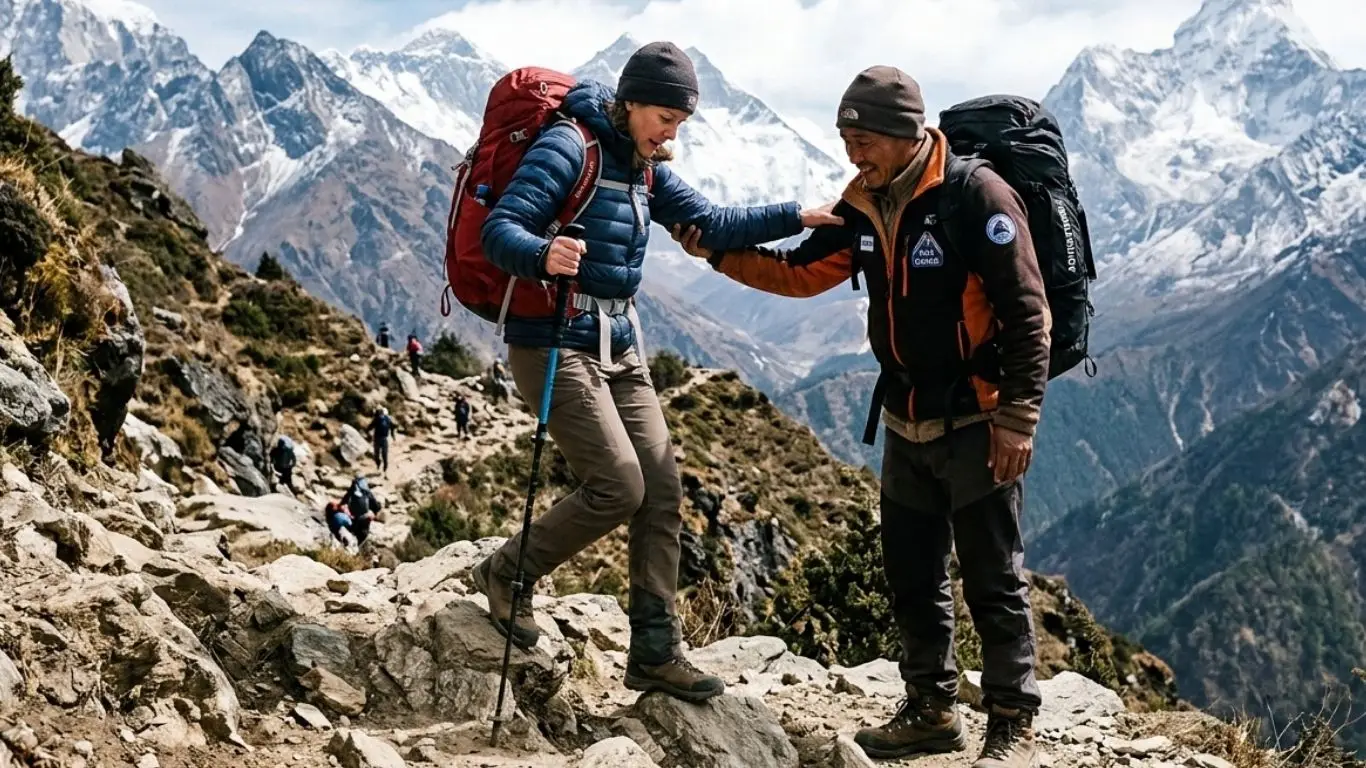
How Local Guides Improve Your Trekking Experience
16/03/2026
When people plan a trek in Nepal, they usually start with
the destination. Some want to stand at Everest Base Camp, some look toward
Annapurna Base Camp, and others prefer the quieter trails around LangtangValley. The route gets most of the attention at first, but one thing often gets
overlooked, and that is the person guiding the journey.
A lot of trekkers think a guide is there mainly to show the
direction. In reality, a local guide usually influences almost every part of
the trek, from how comfortable the day feels to how safely you move at altitude
and even how much you actually understand what you are seeing around you.
Nepal’s mountain trails can look simple when viewed on maps
or social media videos, but once you are actually walking for several hours a
day, small details start mattering a lot more than expected. Trail timing,
weather shifts, local tea house availability, and even knowing when to slow
down can change how the whole trek feels.
That is where local guides make a real difference, and honestly many trekkers only fully understand that after the first few days on the trail.
Local guides understand the trail beyond what maps can tell you
A trekking map gives distance, elevation, and route lines.
It helps, but it never tells the full story.
For example, two sections on a map may look equal in
distance, yet one might take much longer because of steep stone steps, wind
exposure, or trail traffic. A local guide usually knows this before the day
even starts.
That practical understanding helps you manage the trek
better without feeling rushed.
On popular routes, especially around Namche Bazaar, local
guides often know which sections become crowded later in the morning and which
parts feel easier if crossed earlier. These things sound small, but after
several trekking days they really begin to matter.
Weather is another reason local knowledge helps a lot.
In Nepal, mountain weather can shift quickly. A morning that
starts bright may turn cloudy before lunch, and a clear trail can feel very
different once wind starts picking up. A local guide usually notices patterns
that visitors often miss.
Sometimes they suggest leaving earlier than planned, not
because the distance is long but because clouds often build after midday in
certain sections.
That kind of decision often saves energy and improves the overall day without trekkers even realizing why it worked so well.
Local guides help you move more safely at high altitude
Altitude affects everyone differently, even people who feel
physically fit.
This is one of the biggest reasons many trekkers feel more
confident with a local guide. A guide does not just walk beside you. They keep
noticing small things throughout the day.
Someone may become quieter than usual, drink less water,
walk too fast, or start breathing differently on a climb. A local guide often
notices these signs early because they have seen similar patterns many times
before.
That early attention matters because altitude problems
usually start with small symptoms.
Instead of waiting until discomfort becomes obvious, guides
often suggest slowing down, taking a longer break, or drinking more fluids
before the situation gets worse.
This feels natural during the trek because they rarely make
it dramatic.
On higher sections, especially when trekkers move above
3,500 meters, pacing becomes more important than speed. Many people arrive in
Nepal excited and energetic, but that same energy can work against them if they
push too hard early.
A guide helps control that rhythm.
They know when a short climb should stay slow and when a
flatter section allows slightly faster walking. That pacing keeps the body
adapting gradually, which usually makes the following day easier too.
And sometimes what looks like a short distance on paper feels longer in thin air than people expect.
A guide makes the cultural side of trekking much richer
Nepal is not only about mountains. Every trail passes
through villages, traditions, local beliefs, and daily life that most travelers
would otherwise only partly understand.
Without a guide, many people admire what they see but miss
why it matters.
A local guide explains these details naturally while
walking.
For example, when passing prayer walls or mani stones,
guides often explain why trekkers should walk on a certain side. Near
monasteries, they may describe what prayer flags represent or why certain
symbols appear repeatedly in mountain villages.
These are details many people do not learn from travel
blogs.
And because guides usually come from Nepal themselves, they
often add personal stories that make those explanations feel more real.
Sometimes they talk about how mountain families prepare for
winter. Sometimes they explain school life in remote villages or how food gets
transported in higher settlements.
Those conversations often happen casually during tea breaks,
but later they become some of the most memorable parts of the trek.
A mountain view stays in photos, but local stories often stay in memory longer than expected.
Local guides solve problems before they become stressful
Trekking rarely goes exactly as planned, even on well-known
routes.
Flights get delayed, weather changes, tea houses fill up
faster than expected, and sometimes walking speed changes more than expected
after lunch.
A local guide handles many of these things quietly in the
background.
For example, if accommodation becomes busy during peak
trekking season, guides often speak ahead and arrange rooms early. Without
that, trekkers sometimes arrive tired and then spend extra time searching for
available space.
That can feel exhausting after a full day of walking.
Guides also help when transport changes suddenly.
This happens often near Lukla Airport where flights depend
heavily on weather. A local guide usually already understands how these delays
work and what realistic alternatives exist.
Instead of guessing what to do next, trekkers receive
practical options quickly.
That alone removes a lot of unnecessary stress.
They help you use your energy better each day
A lot of first-time trekkers think energy mostly depends on
fitness. Fitness matters, but daily choices matter just as much.
A guide helps you use energy more wisely.
They usually know where short breaks help most, when lunch
should happen, and which sections feel harder than they first look.
Sometimes trekkers feel strong early and want to continue
quickly, but guides often know that saving strength for the final hour makes
the whole day feel easier.
That becomes very noticeable during longer trekking routes.
For example, a climb that starts gently may finish with
steep stone sections. A guide often adjusts pace before reaching that point so
people still feel balanced later.
And honestly, many trekkers only realise later that they
finished the day feeling good because somebody quietly managed the rhythm all
day.
Local guides know viewpoints many people walk past
Some of the best moments in Nepal are not always the biggest
landmarks.
A local guide often points out places that many trekkers
would simply pass by.
This could be a quiet ridge where morning light hits the
mountains perfectly, a village corner with a wider valley view, or a short stop
where the mountain suddenly opens in a way that photos do not fully capture.
Timing matters here too.
The same viewpoint can look ordinary at one hour and amazing
an hour later depending on light and clouds.
A guide usually knows this through experience, not
guesswork.
That is why many people return with photos that feel more varied than expected, even though they followed the same main trail as everyone else.
Trekking feels mentally lighter when somebody knows the route well
Even confident travelers feel uncertain sometimes in remote
mountain areas.
A long uphill section, changing weather, or simply not
knowing how far remains can quietly affect confidence.
A local guide reduces that mental pressure without making it
obvious.
You do not keep checking every trail split. You do not
wonder whether a cloud build-up means something serious. You do not need to
think constantly about where lunch happens or whether the next tea house still
has space.
This mental ease changes the trekking experience more than
many people expect.
People often enjoy the scenery more when they stop worrying
about the practical side every hour.
That is probably why guided treks often feel less tiring emotionally, even when the physical route stays the same.
Local Guide vs Trekking Alone
|
Factor |
With Local Guide |
Trekking Alone |
|
Safety |
Continuous local support on the trail |
Full responsibility stays with the trekker |
|
Route Knowledge |
Real understanding of current trail conditions |
Depends mostly on maps and apps |
|
Cultural Experience |
More local stories and context |
Limited local interaction |
|
Problem Solving |
Faster practical help |
More difficult in remote areas |
|
Confidence |
Stronger comfort during route changes |
More uncertainty in unfamiliar sections |
How to choose the right local guide in Nepal
Not every guide offers the same kind of trekking experience,
so choosing carefully really matters before you book.
A good starting point is checking whether the guide or
trekking company has proper government registration in Nepal. A licensed guide
usually has route training, safety understanding, and practical field
experience that becomes very important once you are in higher mountain areas.
It also helps to read recent reviews instead of only older
testimonials. Travelers often mention things that actually matter on the trail,
like whether the guide adjusted pace well, handled altitude issues calmly, or
communicated clearly during difficult weather.
Before booking, ask simple but practical questions such as:
- How
many years have you guided this route
- What
happens if flights get delayed
- How do
you handle altitude sickness if someone feels weak
- Is the
guide familiar with this route in the current season
The way a company answers usually tells you a lot. Clear
answers often show they know exactly what they are doing.
A company like Nepal Boundary Trekking Agency Pvt. Ltd. usually builds trust
when communication feels direct and honest before the trek even starts. That
first impression matters more than many people expect because once you are
already on the trail, you depend on those small decisions every day.
And honestly, many trekkers only realise after a few days in
the mountains that the guide is not just there for direction. Sometimes its the
guide who notices you need to slow down before you even say anything. Sometimes
they know which tea house has the warmest dining room, or where the weather
usually changes after noon.
Those little things are hard to plan from a website or
travel video.
Even on famous routes like Everest Base Camp, where
thousands of people walk every season, the trek still feels very different
depending on who walks with you. A local guide often makes the route feel less
mechanical and more personal, because there is always something happening
around the trail that only someone local notices first.
And after a few days, many trekkers stop thinking of the
guide as just part of the package. The guide becomes part of the memory too,
which probably explains why people often remember certain conversations from
the trail almost as clearly as the mountain views itself.
Frequently Asked Questions (FAQs)
Q: Why should I hire a local trekking guide in Nepal?
A: A local trekking guide in Nepal helps you with route knowledge, altitude safety, local communication, and cultural understanding. They also make the trek less stressful by managing practical details during the journey.
Q: Are local trekking guides necessary for popular routes in Nepal?
A: Even on popular routes like Everest Base Camp, a local guide improves the experience because they understand trail conditions, weather patterns, and pacing better than most independent trekkers.
Q: Can a local guide help with altitude sickness during trekking?
A: Yes, local guides often notice early altitude symptoms before they become serious. They usually suggest slower pacing, hydration, and extra rest when needed.
Q: Do local guides also arrange tea houses and meals?
A: Yes, many local guides help arrange tea house rooms, meal timing, and overnight logistics, especially during busy trekking seasons.
Q: Is trekking with a local guide safer than trekking alone?
A: In most cases yes, because a guide can react quickly if weather changes, route conditions become difficult, or health issues appear during the trek.
Q: Do local guides explain culture during the trek?
A: Yes, one major advantage of trekking with a local guide is learning about villages, monasteries, local customs, and mountain traditions along the route.
Q: How do I choose a good trekking guide in Nepal?
A: Check for guide license, recent reviews, route experience, and clear communication before booking.