
Table of Contents
- Why Winter Trekking in Nepal Feels Different
- What to Expect While Trekking in Nepal During Winter
- 7. Khopra Ridge and Mohare Danda: Quiet Alternatives with Big Views
- 6. Lower Mustang Trek: Nepal’s Best Winter Secret
- 5. Helambu Trek: Short, Scenic, and Winter-Friendly
- 4. Annapurna Base Camp Trek: A Winter Classic
- 3. Everest View Trek: Big Mountains Without Extreme Cold
- 2. Langtang Valley Trek: Culture, Snow Peaks, and Quiet Trails
- 1. Ghorepani Poon Hill Trek: The Perfect Winter Starter
- Easy Winter Treks for Beginners
- Moderate Winter Treks for Experienced Hikers
- Packing Smart for Winter Trekking in Nepal
- Winter Trekking Costs and Budget Planning
- Safety and Comfort During Winter Treks
- Choosing the Best Winter Month to Trek
- Frequently Asked Questions (FAQs)
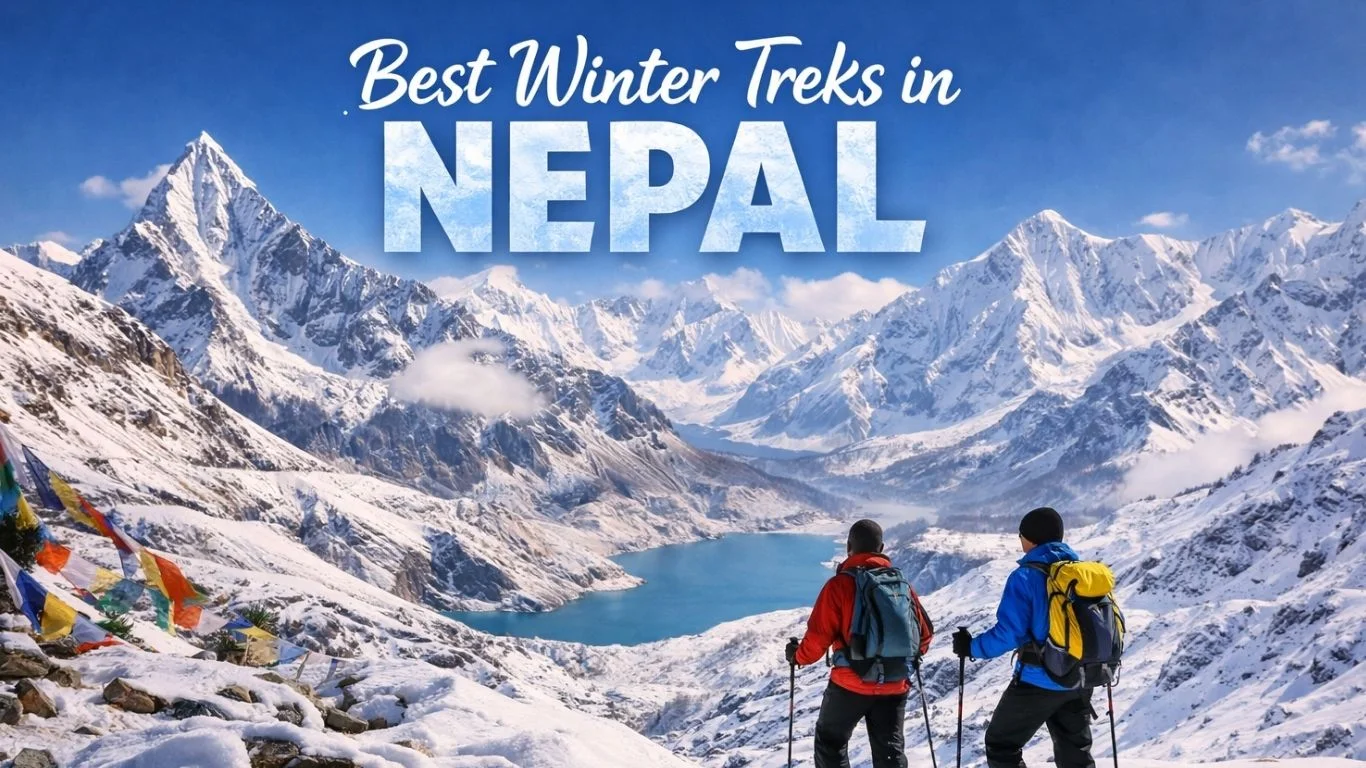
Top Best Winter Treks in Nepal 2025/2026
30/12/2025
When most people think about trekking in Nepal, they picture spring rhododendrons (blooming red rhododendrons) or autumn crowds lining the trails. Yet winter quietly offers something special that most travelers overlook. The air turns crisp, the skies open up into a deep blue canvas, the mountain feels closer, sharper, and more dramatic. With few trekkers on the route, every step feels personal, almost meditative.
With my 10+ years of trekking experience in Nepal, winter trekking isn’t about rushing to tick destinations off a list. Instead, it’s about slowing down, feeling the cold mountain air on your face, and enjoying Nepal’s landscape without the noise. Some routes look more beautiful in winter than in other seasons, especially those at moderate altitudes or in rain shadow regions (dry regions where little rain falls). That natural shift leads straight into the treks that truly stand out when the temperatures drop.
Why Winter Trekking in Nepal Feels Different
Winter changes the rhythm of the Himalayas. Villages become quieter, trails open up, and the mountain dominates the horizon without clouds stealing the view. Unlike monsoon or other seasons, winter offers stable weather patterns, especially in December and early February.
Moreover, trekkers often enjoy better visibility during winter mornings. Snow dusts on the peaks are just enough to make them glow. While lower trails remain manageable with proper gear. This season feels like a gift to photographers. For budget travelers, it brings another advantage because of reduced accommodation costs and easy access to teahouses.
That said, trekking in the winter season requires smart planning. Cold nights, shorter daylight hours, and occasional snowfall demand preparation rather than spontaneity. Once trekkers understand these factors, winter becomes one of the most rewarding times to explore Nepal on foot.
What to Expect While Trekking in Nepal During Winter
Temperatures vary depending on altitude, but days usually stay comfortable under direct sunlight. However, at night, the temperature can drop below freezing, especially above 3000 meters. Snowfall remains light on the most popular routes, although high passes may close temporarily after heavy snowfall.
Teahouses stay open on most established trails, though options become limited in remote areas. Meals in the teahouse are warm and healthy, and locals often have more time to connect with trekkers during this off-season. With this foundation in mind, choosing the right trek makes all the difference.
7. Khopra Ridge and Mohare Danda: Quiet Alternatives with Big Views
For trekkers wanting Annapurna views without crowds, Khopra Ridge and Mohare Danda provide excellent winter options. These routes stay less commercialized, offering peaceful trails and community-run lodges.
Winter skies make distant peaks appear closer, and sunrise viewpoints feel peaceful rather than busy. Although nights turn cold, the sense of solitude makes up for the extra layers needed.
These treks suit hikers who value scenery, sustainability, and a slower pace.
What to expect:
• Quiet trails with minimal crowds
• Stunning Annapurna and Dhaulagiri views
• Crystal-clear winter skies and sharp mountain visibility
• Peaceful sunrise viewpoints without the rush
• Community-run and eco-friendly lodges
• Less commercialized trekking experience
• Colder nights, especially in the winter months
• Moderate trekking difficulty
• Slower, more relaxed trekking pace
• Strong focus on sustainability and local communities
6. Lower Mustang Trek: Nepal’s Best Winter Secret
Lower Mustang stands apart from other regions thanks to its location in the rain-shadow of the Himalayas. While snow blocks many trails elsewhere, Mustang often remains dry and accessible.
The landscape feels dramatic and out of this world, with deep canyons, ancient caves, and windswept plateaus. Tibetan culture shapes daily life here, from monasteries to prayer wheels lining village paths.
Winter enhances the region’s raw beauty, and fewer visitors create a sense of exploration rarely found on popular routes. For trekkers seeking something truly different, Lower Mustang delivers a winter experience unlike any other in Nepal.
What to Expect:
• Dry trails due to rain-shadow location
• Accessible even when other regions are snowed in
• Dramatic desert-like landscapes and deep canyons
• Ancient caves carved into cliff walls
• Strong Tibetan-influenced culture and traditions
• Monasteries, prayer wheels, and stone villages
• Fewer trekkers and a strong sense of exploration
• Cold, windy conditions are typical in winter
• Wide-open plateaus with surreal scenery
• A completely different winter trekking experience in Nepal
5. Helambu Trek: Short, Scenic, and Winter-Friendly
Close to Kathmandu, the Helambu trek offers an easy winter escape into the mountains. The trail doesn’t reach extreme altitudes, which keeps conditions manageable even in January.
Villages along the route showcase Hyolmo and Sherpa culture, while views stretch across the Langtang range. Winter brings calm trails and warm interactions with locals, making this trek ideal for those short on time.
Because of its accessibility and moderate terrain, Helambu works well for beginners or trekkers easing into winter conditions.
What to expect:
• Short and easy access from Kathmandu
• Low to moderate altitude, suitable for winter
• Manageable conditions even in January
• Quiet trails with fewer trekkers
• Hyolmo and Sherpa village culture
• Scenic views of the Langtang range
• Comfortable walking days and gentle terrain
• Warm local hospitality in the winter season
• Ideal for beginners and first-time trekkers
4. Annapurna Base Camp Trek: A Winter Classic
The Annapurna Base Camp trek transforms during winter. Snow blankets the amphitheater of peaks, creating a surreal landscape that feels almost untouched. Although colder than autumn, winter brings solitude that many trekkers crave.
The route climbs gradually through villages and forests before opening into high alpine terrain. Winter trekkers must prepare for icy mornings and chilled nights, yet the payoff remains unforgettable. Standing at Annapurna Base Camp surrounded by towering peaks under a clear winter sky feels humbling and powerful.
With good preparation and flexible scheduling, winter trekking to Annapurna Base Camp remains both safe and spectacular.
What to expect:
• Snow-covered landscapes and dramatic alpine scenery
• Far fewer crowds compared to peak seasons
• Quiet, almost untouched feel inside the sanctuary
• Gradual ascent through villages and forests
• Cold mornings and freezing nights
• Icy sections on the trail, especially early in the day
• Clear winter skies and sharp mountain views
• Strong sense of solitude and scale at base camp
• Requires good preparation and flexibility
• Safe and rewarding with proper winter gear
3. Everest View Trek: Big Mountains Without Extreme Cold
Not everyone wants to push toward Everest Base Camp in winter, and that’s where the Everest View trek shines. This route delivers iconic Himalayan scenery while staying at relatively lower elevations.
Trekkers pass through Sherpa villages, cross suspension bridges, and enjoy close-up views of Ama Dablam and Everest itself. Winter skies enhance visibility, often offering sharper mountain outlines than other seasons.
Because the trek avoids the highest passes, it suits travelers with limited time or those adjusting to altitude. The experience still feels authentically Himalayan, just without the intensity of deeper Everest routes.
What to expect:
• Lower altitude trek in the Everest region
• Stunning winter views of Everest and Ama Dablam
• Clear, sharp mountain visibility in winter
• Traditional Sherpa villages and monasteries
• Scenic suspension bridges and river valleys
• Fewer crowds than Everest Base Camp
• Shorter itinerary, ideal for limited time
• Easier acclimatization compared to higher routes
• Cold mornings but manageable winter conditions
• Authentic Everest experience without extreme difficulty
2. Langtang Valley Trek: Culture, Snow Peaks, and Quiet Trails
Just north of the Kathmandu Valley, the Langtang Valley trek delivers a perfect blend of culture and alpine scenery. Winter adds a peaceful charm to this region, where Tamang villages sit beneath snow-covered peaks.
The trail gradually ascends through forests, opening into wide valleys surrounded by towering mountains. During winter, yaks move slowly across frozen pastures, and prayer flags flutter against clear skies. Although temperatures drop at night, days remain pleasant for trekking.
What to expect:
• Easy access just north of Kathmandu
• Quiet winter trails with minimal crowds
• Snow-dusted Tamang villages and rich local culture
• Gradual ascent through forests and open valleys
• Wide alpine landscapes beneath towering peaks
• Yaks grazing across frozen pastures
• Clear winter skies and crisp mountain views
• Cold nights but comfortable daytime trekking
• Peaceful, slow-paced trekking atmosphere
• Strong balance of culture and alpine scenery
1. Ghorepani Poon Hill Trek: The Perfect Winter Starter
Few treks strike a better balance between scenery, comfort, and accessibility than the Ghorepani Poon Hill trek. Sitting at a moderate altitude, this route avoids harsh winter conditions while still delivering jaw-dropping mountain views.
As trekkers walk through stone villages and dense forests, the trail gradually opens toward panoramic viewpoints. The highlight arrives early in the morning at Poon Hill, where Annapurna and Dhaulagiri rise above layers of mist. Winter mornings often reward trekkers with crystal-clear sunrises, making the climb worth every step.
Because the trail remains well-maintained and populated throughout the year, it suits both beginners and experienced hikers alike. In winter, fewer crowds allow trekkers to enjoy viewpoints without the usual congestion.
Langtang works especially well for trekkers who want a longer journey without venturing (without taking risk) into extreme altitudes. With proper layering and steady pacing, winter trekking here feels challenging yet deeply rewarding.
What to expect:
• Moderate-altitude trek, avoiding harsh winter conditions
• Dense forests and traditional stone villages along the trail
• Gradual ascent toward panoramic viewpoints
• Stunning winter sunrises at Poon Hill
• Crystal-clear visibility of Annapurna and Dhaulagiri
• Well-maintained trail suitable for beginners and experienced trekkers
• Fewer crowds than peak season, especially at viewpoints
• Comfortable teahouses and steady trekking pace
• Challenging but manageable for winter conditions
• Rewarding combination of scenery, culture, and accessibility
Easy Winter Treks for Beginners
Not every winter trek requires advanced experience. Routes like Poon Hill, Helambu, and Everest View remain accessible with basic fitness and preparation. Their moderate altitudes reduce risks, while established infrastructure ensures safety and comfort.
Beginners benefit from winter’s quieter trails, allowing them to walk at their own pace without pressure from crowds.
Moderate Winter Treks for Experienced Hikers
Langtang Valley, Khopra Ridge, and Annapurna Base Camp fall into the moderate category. These routes demand better endurance and cold-weather readiness, yet reward trekkers with immersive mountain experiences.
With proper planning, these treks strike a balance between challenge and enjoyment.
Packing Smart for Winter Trekking in Nepal
Layering becomes the foundation of winter trekking comfort. A warm base layer, insulating mid-layer, and windproof outer shell keep temperatures manageable throughout the day. A quality sleeping bag rated for sub-zero temperatures makes nights far more comfortable.
Accessories matter too. Gloves, thermal socks, and sun protection help regulate body temperature while walking under strong winter sunlight. Trekking poles add stability on icy sections, especially during early mornings.
Winter Trekking Costs and Budget Planning
Winter often lowers overall trekking costs. Teahouses offer discounted rooms, flights see less demand, and guides remain more available. Daily expenses depend on route and comfort level, yet winter generally allows trekkers to stretch their budget further.
Hiring a guide in winter adds safety and local insight, particularly when weather conditions change unexpectedly. You can connect with us at Nepal Boundary Trekking Agency Pvt. Ltd. if you are looking for an expert and friendly guide and a smooth trekking experience.
Safety and Comfort During Winter Treks
Winter trekking remains safe with the right mindset. Checking weather updates, starting hikes early, and maintaining flexibility help avoid problems. Altitude sickness risks still exist, so gradual ascents and hydration remain essential.
Local guides understand winter trail conditions and provide valuable support, especially in remote areas.
Choosing the Best Winter Month to Trek
December offers clear skies and relatively mild conditions early in the month. January brings colder nights but fewer trekkers, creating unmatched solitude. February slowly warms up, combining winter scenery with longer daylight hours.
Each month has its own charm, and choosing months depends on your comfort level and priorities. Hope this guide will help you choose the right month for trekking in winter and take your trekking experience to the next level.
If you need help selecting the ideal itinerary, I can tailor one to your specific dates and treks, taking into account your fitness level. I run Nepal Boundary Trekking Agency Pvt. Ltd. and have guided over 1,000 clients from around the world in my 12+ years of guiding and trekking experience. We offer custom trek plans, handle permits and logistics, and pair you with experienced local guides and porters so you can focus on the mountains and the views. You can contact us at Nepal Boundary Trekking Agency Pvt. Ltd. for booking a trek.
Frequently Asked Questions (FAQs)
Q: Is winter actually a good time to trek in Nepal?
A: Yes, absolutely. Winter is one of the most underrated trekking seasons in Nepal. The skies stay clear, the air feels crisp, and the mountains look sharper than ever. Fewer trekkers on the trail also mean a quieter, more personal experience in the Himalayas.
Q: Which winter trek is best for beginners?
A: If you’re new to trekking, routes like Ghorepani Poon Hill, Helambu, and the Everest View Trek are great choices. These trails stay at safer altitudes, have good teahouses, and don’t demand extreme fitness. With basic preparation, beginners can enjoy them comfortably even in winter.
Q: Will I face heavy snowfall during winter treks?
A: Most popular winter treks don’t get heavy snowfall. You may see light snow at higher points, which actually adds beauty to the landscape. Serious snow usually affects high passes, not the common winter-friendly routes.
Q: Are teahouses open during winter?
A: Yes, teahouses remain open on all major trekking routes. In fact, winter feels warmer inside teahouses because hosts have fewer guests and give more attention. You’ll often enjoy quieter evenings, hot meals, and meaningful conversations with locals.
Q: How cold does it get while trekking in winter?
A: Days feel pleasant when the sun is out, especially while walking. Nights can get cold, sometimes below freezing at higher altitudes. A warm sleeping bag and proper layering make a huge difference and keep you comfortable.
Q: Is winter trekking in Nepal safe?
A: Winter trekking is safe if you trek smart. Start your hikes early, check weather updates, and don’t rush your itinerary. Most problems happen due to poor planning, not the season itself.
Q: Do I really need a guide for winter trekking?
A: You don’t always need one, but having a guide in winter makes things much easier and safer. Guides know which trails are icy, where to stop, and how to adjust plans if weather changes. It also lets you relax and enjoy the trek without stress.
Q: What should I pack for a winter trek in Nepal?
A: Warm layers are key. Pack thermal innerwear, a down jacket, a windproof outer layer, gloves, woolen socks, and a good sleeping bag. Trekking poles help a lot on icy mornings, especially on downhill sections.
Q: Is winter trekking cheaper than other seasons?
A: Yes, winter trekking usually costs less. Teahouses offer better rates, flights are easier to book, and guides are more available. It’s a great season if you want a high-quality trekking experience on a smaller budget.
Q: Which winter month is best for trekking in Nepal?
A: December offers clear skies and manageable cold. January is colder but incredibly quiet and peaceful. February slowly warms up and brings longer days. The best month really depends on how much cold you’re comfortable with.