
Table of Contents
- 1. Prepare Before You Start Packing
- 2. Clothing: Pack Layers Instead of Extra Outfits
- Essential clothing
- Why layering matters
- 3. Footwear: Get This Right Before You Travel
- What to bring
- Break in your shoes before departure
- 4. Backpack and Trekking Equipment
- If you are carrying your own luggage
- If you are using a porter
- 5. Sleeping Bag, Toiletries and Personal Items
- Do you need a sleeping bag?
- Toiletries and personal supplies
- 6. Water, Snacks and Electronics
- Water and purification
- Electronics
- 7. Documents, Cash and Travel Insurance
- 8. First Aid and Personal Medication
- 9. What to Pack for Each Season
- Spring: March to May
- Autumn: September to November
- Winter: December to February
- Monsoon: June to August
- 10. What Can You Buy or Rent in Nepal?
- Items worth bringing from home
- Items you may be able to buy or rent
- 11. Final Packing Checklist Before Departure
- Plan Your Annapurna Base Camp Trek with Nepal Boundary Trekking
- Frequently Asked Questions (FAQs)
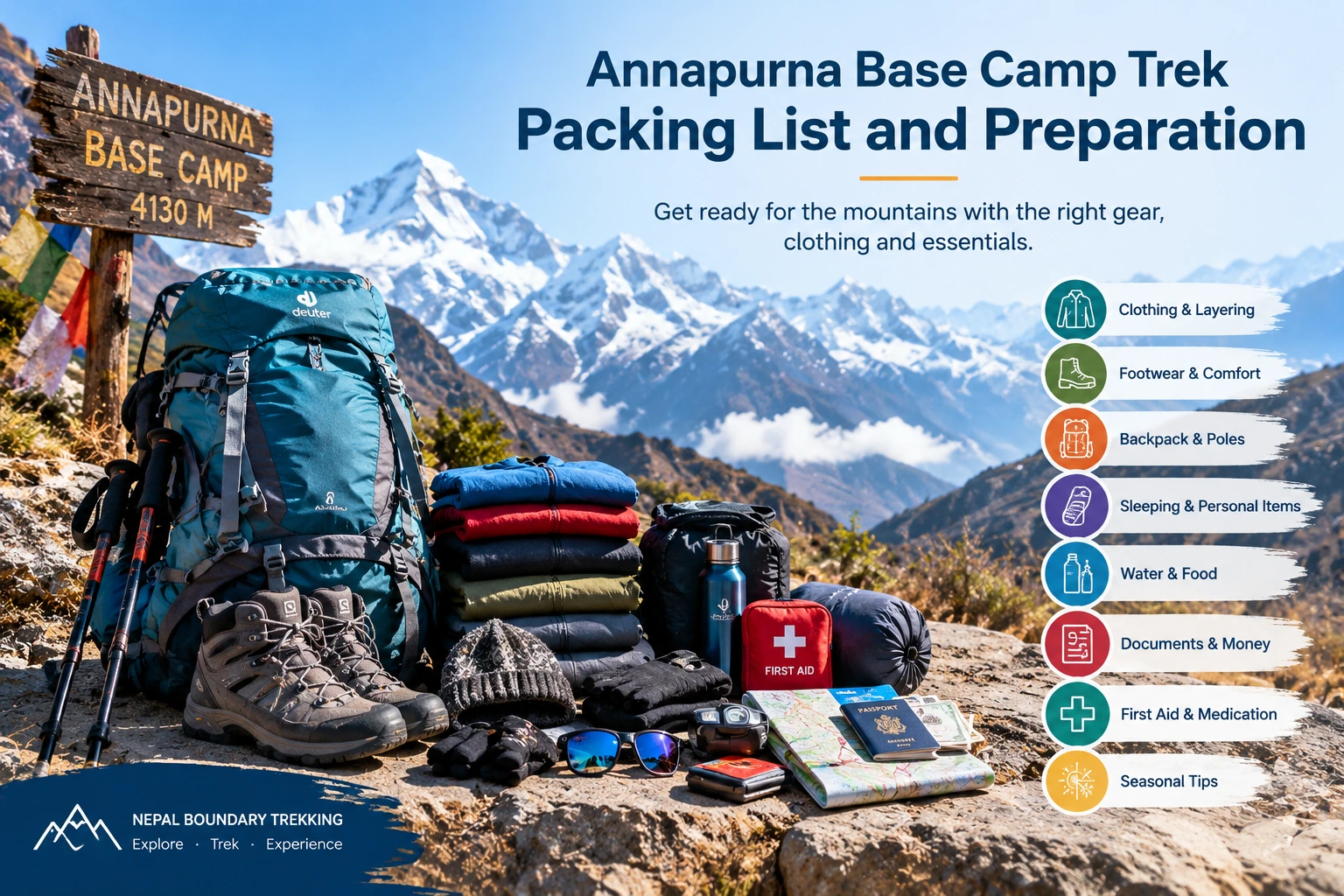
Annapurna Base Camp Trek Packing List: What to Bring
24/10/2026
Packing for the Annapurna Base Camp trek is easier when you
know what you will use every day and what you can leave behind. You need
comfortable footwear, clothes that work in layers, protection from rain and
sun, and enough personal supplies for several days on the trail.
The challenge is that the weather can change as you gain
altitude. A T-shirt may be comfortable while climbing lower sections, but you
will want warmer clothing when temperatures drop in the evening or early
morning.
This Annapurna Base Camp trek packing list covers the
essentials, optional equipment, seasonal differences and practical decisions to
make before leaving for Nepal.
1. Prepare Before You Start Packing
Before buying equipment, check your itinerary and find out
what your trekking package includes. Your packing needs will depend on the
season, the length of your trek, your accommodation arrangements and whether
you plan to use a porter.
Start by dividing your belongings into three groups:
- Essential
items: Things you need for walking, staying warm, managing rain and
looking after your health.
- Useful
extras: Items that make the trek more comfortable but are not
necessary for everyone.
- Items
to leave behind: Heavy or bulky belongings that you are unlikely to
use on the trail.
This simple approach helps prevent overpacking.
If you plan to use a porter, ask your trekking company about
luggage limits, permitted bag types and what you need to carry yourself. You
will still need a daypack for water, snacks, a warm layer, rain protection and
personal essentials.
2. Clothing: Pack Layers Instead of Extra Outfits
You do not need a different outfit for every day. A small
collection of quick-drying clothes is usually more practical than a heavy bag
filled with cotton T-shirts and spare trousers.
Essential clothing
Consider packing:
- Two or
three moisture-wicking T-shirts
- One or
two thermal tops, depending on the season
- Two
pairs of trekking trousers or one pair plus suitable spare clothing
- Three
or four pairs of trekking underwear
- Two or
three pairs of trekking socks, with extras if you prefer
- One
fleece or warm mid-layer
- One
insulated jacket suitable for the expected conditions
- One
waterproof jacket
- Waterproof
trousers or other reliable rain protection
- A warm
hat and lightweight sun hat
- Gloves
suitable for the season
- A neck
gaiter or buff
Adjust these quantities to the length of your trek and
whether you expect to wash and dry clothes along the way.
Why layering matters
Instead of wearing one thick jacket throughout the day,
combine several layers. A base layer manages moisture, a fleece adds warmth,
and an insulated jacket helps when the temperature drops. A waterproof outer
layer protects you from rain and wind.
You can remove layers while climbing and put them back on
when you stop. This is generally more practical than carrying several bulky
jackets.
Avoid relying on cotton as your main trekking clothing.
Cotton can remain damp after sweating, which may leave you uncomfortable in
cold conditions.
3. Footwear: Get This Right Before You Travel
Your shoes will affect your comfort throughout the trek. The
Annapurna Base Camp route includes uneven paths, stone steps, uphill sections
and descents. Wet weather can also make some surfaces slippery.
What to bring
Essential:
- Well-fitting
trekking boots or trail shoes with suitable grip
- Trekking
socks that fit comfortably
- Blister
plasters or your preferred blister-care supplies
Optional:
- Lightweight
sandals or camp shoes for wearing around your accommodation
- Gaiters
if conditions and your chosen route make them useful
- Additional
foot-care products you already know work for you
Break in your shoes before departure
Do not take brand-new footwear straight onto a multi-day
trek. Wear it on regular walks, including longer outings and uphill routes,
before your trip.
Check for rubbing around the heel and toes. Make sure your
socks fit well and that your toes have enough room when walking downhill.
If you already own comfortable hiking shoes that suit the
terrain and weather, you may not need to buy an expensive new pair. Fit and
suitability matter more than the brand.
4. Backpack and Trekking Equipment
Your backpack requirements depend on how you intend to carry
your belongings.
If you are carrying your own luggage
Choose a backpack that fits your body properly and has a
comfortable hip belt. Avoid packing it so heavily that it restricts your
movement or makes uphill walking unnecessarily difficult.
If you are using a porter
You may be able to keep your main luggage in a larger duffel
or trekking bag while carrying a smaller daypack. Confirm the arrangement and
luggage allowance with your trekking company before departure.
Your daypack should hold everything you might need between
stops.
Daypack essentials:
- Water
bottle or hydration system
- Waterproof
jacket
- Warm
layer
- Sunscreen
and sunglasses
- Snacks
- Phone
and small power bank
- Personal
medication
- Headlamp
- Small
amount of cash
Other useful equipment:
- Backpack
rain cover or waterproof liner
- Trekking
poles
- Packing
cubes or dry bags
- Reusable
bag for laundry
- Small
travel lock, if appropriate for your luggage
Trekking poles are optional, but they can help with balance
and provide extra support on steep steps and descents. If you already use them
on hikes, consider bringing them.
Keep your rain jacket, water and essential medication easy
to reach. These items should not be buried at the bottom of your bag.
5. Sleeping Bag, Toiletries and Personal Items
Teahouses provide accommodation along the Annapurna BaseCamp route, but facilities and bedding can vary. Before packing bulky sleeping
equipment, ask what is available for your itinerary.
Do you need a sleeping bag?
Not every trekker needs to bring or buy a sleeping bag. The
decision depends on the season, the accommodation arrangements, your personal
comfort and the advice you receive about current conditions.
A sleeping bag may be useful if you are trekking during
colder conditions or want an additional layer of warmth. If you are travelling
in a warmer period and your accommodation arrangements provide suitable
bedding, you may decide that carrying one is unnecessary.
Ask your trekking company whether a sleeping bag is
recommended and whether rental equipment is available. Confirm the expected
quality and suitability of any rented item before relying on it.
Toiletries and personal supplies
Pack the items you use regularly rather than bringing
full-size containers.
Essential items:
- Toothbrush
and toothpaste
- Small
containers of soap or shampoo
- Toilet
paper or tissues
- Hand
sanitiser
- Quick-drying
towel
- Personal
hygiene products
- Lip
balm
- Sunscreen
Optional items:
- Earplugs
- Eye
mask
- Wet
wipes
- Moisturiser
- Small
pack of laundry detergent
- A
lightweight sleeping liner
Carry rubbish with you until you find a suitable disposal
point. Use water responsibly and avoid leaving packaging or personal waste
along the trail.
6. Water, Snacks and Electronics
You do not need to carry all your meals for the trek.
Teahouses along the route serve food, although menus and availability can vary
by location.
Bring a few familiar snacks for longer walking sections.
Energy bars, nuts or other compact snacks can be useful when you want something
between meals.
Water and purification
Carry a reusable water bottle or hydration system that is
convenient to use while walking. You may need to refill it at teahouses or
other suitable locations.
Do not assume that water from a tap, stream or other source
is safe to drink untreated. Ask your guide about appropriate refill points and
use a suitable purification method when necessary.
Useful items include:
- Reusable
water bottles or a hydration bladder
- Water
purification tablets or a suitable filter
- Snacks
for walking breaks
- Electrolyte
products, if appropriate for you
Electronics
You may want to bring:
- A
mobile phone
- A
charging cable
- A
power bank
- A
headlamp
- A
plug adapter if required for your devices
Charging access can vary between teahouses, and power may
not always be available when you need it. Charge devices when you have the
opportunity and keep electronics protected from moisture.
A headlamp is particularly useful because it lets you keep
your hands free. Bring spare batteries or make sure rechargeable devices are
charged before you set off.
7. Documents, Cash and Travel Insurance
Prepare your documents before leaving home. Keep them in a
waterproof pouch and store copies separately from the originals.
Your checklist should include:
- Passport
and relevant travel documents
- Copies
of important documents
- Required
trekking permits or arrangements for obtaining them
- Travel
insurance details
- Emergency
contact information
- Nepalese
rupees for expenses along the route
- A
secure pouch for money and documents
Do not rely entirely on bank cards or mobile payments. Cash
access may be limited once you leave larger towns, so plan ahead.
Check that your travel insurance covers the activities and
altitude involved in your itinerary. Read the policy carefully, including its
rules for emergency evacuation.
Permit and guide requirements can change. Confirm the
current rules with your trekking company or the relevant official authority
before departure rather than relying on an old online checklist.
8. First Aid and Personal Medication
A small personal first-aid kit is useful for minor problems.
It should complement, not replace, appropriate medical care and your guide's
emergency arrangements.
Consider bringing:
- Blister
plasters
- Small
wound dressings
- Medical
tape
- Antiseptic
wipes
- Personal
prescription medication
- Any
familiar over-the-counter medicine that is safe for you
- Sunscreen
and lip balm with sun protection
Keep prescription medication in its original packaging where
possible. Carry enough for the full trip, plus a reasonable allowance for
delays.
If you have a medical condition or are unsure how you might
respond to altitude, seek advice from a qualified healthcare professional
before travelling. Discuss any medication for altitude sickness with a
clinician rather than relying on another trekker's experience.
Learn the warning signs of altitude sickness before you
start. Headache, nausea, dizziness and unusual tiredness can be symptoms. Tell
your guide if you feel unwell. Confusion, difficulty walking straight or
breathlessness at rest can indicate a serious emergency and require immediate
medical assessment and urgent action.
Good preparation does not remove altitude risks. A sensible
itinerary, acclimatisation and prompt attention to symptoms remain essential.
9. What to Pack for Each Season
Your travel dates should influence the clothes and equipment
you choose. Conditions vary from year to year, so use this section as a
starting point and check the forecast and trail conditions before leaving.
Spring: March to May
Spring can bring comfortable walking conditions at lower
elevations, but mornings and evenings may still be cold at higher locations.
Prioritise:
- Breathable
trekking clothes
- A
fleece or warm mid-layer
- An
insulated jacket
- Rain
protection
- Sun
hat, sunglasses and sunscreen
- Comfortable
footwear with good grip
Do not leave your warm layers behind simply because
Kathmandu or Pokhara feels warm before your trek.
Autumn: September to November
Autumn is a popular trekking season. Conditions can be
favourable, but temperatures still change with altitude, weather and time of
day.
Bring:
- Layered
trekking clothes
- A
warm jacket for evenings and early starts
- Waterproof
protection
- Sun
protection
- A
headlamp
- Comfortable
trekking footwear
Arrange accommodation and transport in advance when needed,
especially if you plan to travel during a busy period.
Winter: December to February
Winter can bring colder weather, snow and icy sections at
higher elevations. Your equipment must suit the conditions expected on your
chosen dates.
You may need:
- Warmer
thermal layers
- A
well-insulated jacket
- Warm
gloves
- A
warm hat
- Additional
protection for exposed skin
- Footwear
suitable for expected trail conditions
Ask about current trail conditions before departure. If snow
or ice makes a section unsafe, follow local advice and be prepared to change
your plans.
Monsoon: June to August
Rain can make trails muddy and slippery. Cloud cover may
reduce mountain visibility, and landslides or transport disruptions can affect
some areas.
Prioritise:
- A
reliable waterproof jacket
- Waterproof
trousers or suitable rain protection
- A
backpack liner or dry bags
- Quick-drying
clothing
- Footwear
with good grip
- Spare
socks
- Protection
for your phone and other electronics
Check current local conditions before travelling, and
discuss possible route or transport changes with your trekking company.
10. What Can You Buy or Rent in Nepal?
You do not need to purchase every item before arriving in
Nepal. Some trekking supplies and equipment are available in major tourist
centres, particularly Kathmandu and Pokhara. However, availability, quality,
sizing and prices vary.
Items worth bringing from home
Bring items that must fit well or that you depend on for
comfort and safety.
These include:
- Broken-in
trekking boots or shoes
- Comfortable
trekking socks
- Prescription
medication
- Personal
medical supplies
- Well-fitting
thermal layers
- Essential
electronics and chargers
Finding the correct size or a suitable replacement after
arrival may be difficult, so do not leave important personal items until the
last minute.
Items you may be able to buy or rent
Depending on availability, you may be able to find:
- Trekking
poles
- Backpacks
and duffel bags
- Sleeping
bags
- Down
or insulated jackets
- Hats
and gloves
- Water
bottles and small trekking accessories
Inspect rented equipment before accepting it. Check zips,
straps, fastenings and overall condition. For a sleeping bag, ask about its
suitability for the expected conditions and how it has been maintained.
Do not assume that every item will be available in the exact
size or specification you need. Contact your trekking company in advance if you
plan to rent essential equipment.
11. Final Packing Checklist Before Departure
Use this checklist when you are nearly ready to leave.
Clothing and footwear
- Trekking
shirts and trousers
- Thermal
layers appropriate for the season
- Fleece
and insulated jacket
- Waterproof
jacket and rain protection
- Trekking
socks and underwear
- Well-fitting,
broken-in footwear
- Warm
hat, sun hat and suitable gloves
Trekking equipment
- Backpack
or daypack
- Rain
cover or waterproof liner
- Water
bottles or hydration system
- Water
purification method
- Headlamp
- Trekking
poles, if needed
- Power
bank and charging cable
Personal essentials
- Toiletries
and quick-drying towel
- Sunscreen
and lip balm
- Personal
medication and basic first aid
- Passport
and relevant documents
- Travel
insurance details
- Required
permits or arrangements for obtaining them
- Nepalese
rupees
- Emergency
contact details
Final checks
- Confirm
the itinerary and expected walking conditions.
- Check
the weather forecast and local trail advice.
- Ask
what equipment and bedding are provided.
- Confirm
the porter arrangement and luggage allowance.
- Test
your footwear and rain gear.
- Make
sure your insurance covers your planned trek.
Once everything is packed, check the weight of your bag.
Remove unnecessary extras, but do not sacrifice suitable clothing, water,
personal medication or essential safety equipment to make it lighter.
Plan Your Annapurna Base Camp Trek with Nepal Boundary Trekking
A good packing list depends on more than the destination.
Your travel dates, itinerary, accommodation and luggage arrangements all affect
what you need to carry.
Before purchasing new equipment, check what you already own
and ask your trekking company which items you may be able to rent or obtain
locally.
Need help preparing for Annapurna Base Camp? Contact
Nepal Boundary Trekking on WhatsApp to discuss equipment, local supplies,
luggage arrangements and your planned itinerary. Confirm the details before
departure so you can pack for your actual trip rather than carrying equipment
you may never use.
Frequently Asked Questions (FAQs)
Q: What should I pack for the Annapurna Base Camp trek?
A: Start with well-fitting trekking footwear, moisture-wicking clothes, warm layers, rain protection, a backpack, water bottles, sun protection, personal medication and travel documents. Adjust your list to the season and the services included in your trekking package.
Q: Do I need a sleeping bag for Annapurna Base Camp?
A: It depends on the season, accommodation and your personal comfort. Ask your trekking company whether bedding is provided and if a sleeping bag is recommended for your itinerary. If you plan to rent one, confirm its condition and suitability before relying on it.
Q: Can I buy trekking gear in Nepal?
A: Some trekking gear is available in Kathmandu and Pokhara, including certain clothing, backpacks and accessories. Availability and quality vary, so bring essential personal items and well-fitting footwear from home. Confirm rental options in advance if you need specific equipment.
Q: How much clothing should I bring?
A: Pack enough clothing for your itinerary, but avoid taking a separate outfit for every day. Quick-drying layers can be worn in different combinations. Your final quantities should depend on the length of your trek, expected weather and opportunities to wash and dry clothes.
Q: What is the most important item on the packing list?
A: There is no single item that guarantees a comfortable or safe trek. Proper footwear, suitable clothing, rain protection, water, personal medication and preparation all matter. A sensible itinerary and attention to changing mountain conditions are just as important as the equipment in your bag.