
Table of Contents
- Can You Reach Everest Base Camp Without a Lukla Flight?
- Why Do Some Trekkers Avoid the Lukla Flight?
- Everest Base Camp by Road From Kathmandu
- What is the journey like?
- Jiri to Everest Base Camp
- Why choose the Jiri route?
- Salleri vs Jiri: Which Route Is Different?
- How Many Days Do You Need for EBC Without Flying?
- A useful way to think about it
- Is Everest Base Camp Without a Lukla Flight More Difficult?
- What Does the Salleri Route to Everest Base Camp Look Like?
- Kathmandu
- Salleri and Lower Solu
- Joining the Everest Trail
- Namche Bazaar
- Everest Base Camp
- What Is the Jiri-to-Everest Route Like?
- What Are the Benefits of Trekking to EBC Without Flying?
- What Are the Downsides?
- Long road journeys
- More total travel time
- Road conditions can change
- More walking on the Jiri route
- More planning
- What Permits Do You Need for Everest Base Camp Without Flying?
- What Should You Pack for an Overland EBC Trek?
- Essential trekking gear
- Useful items for the road journey
- How Can You Prepare for the Trek?
- What About Altitude Sickness?
- Is EBC Without Lukla Flight Worth Considering?
- Planning an Everest Base Camp Trek Without the Lukla Flight
- Frequently Asked Questions (FAQs)
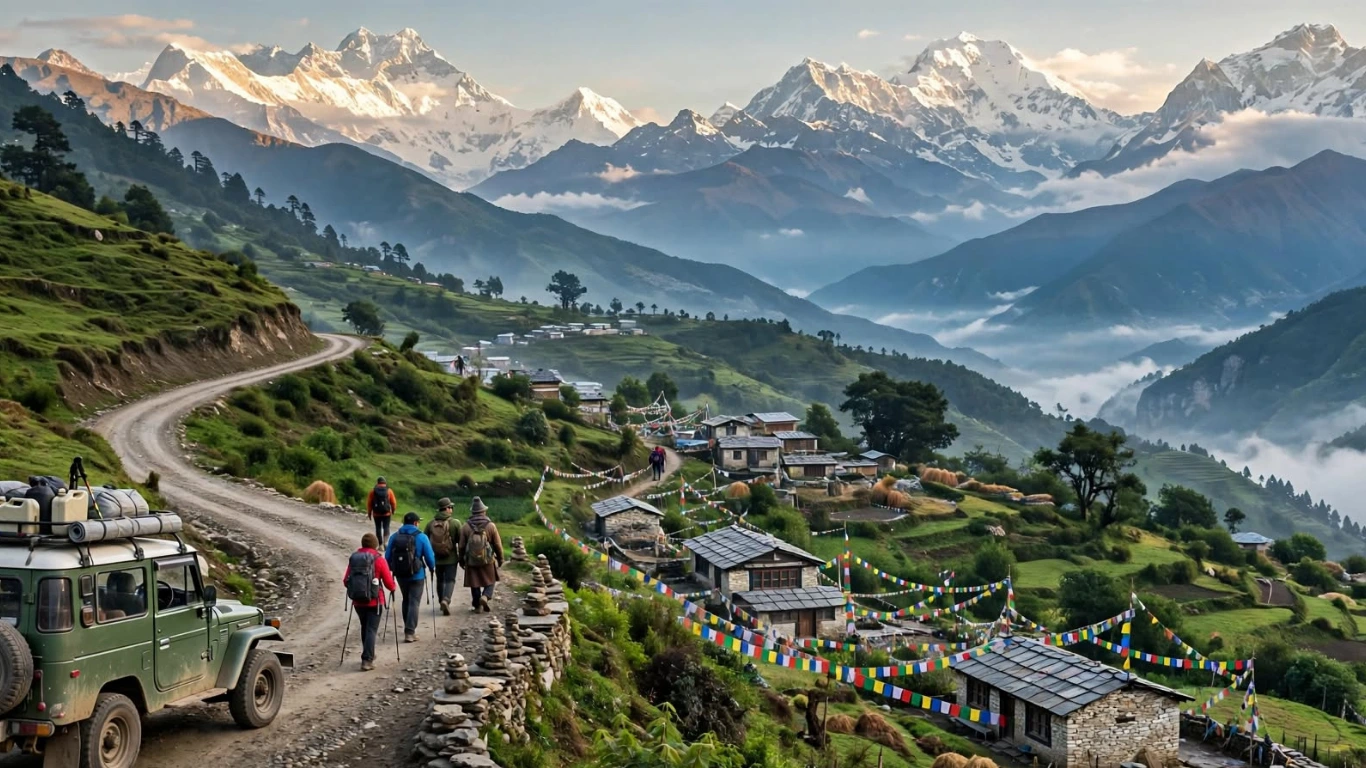
Everest Base Camp Without Lukla Flight: Is There Another Way to Reach EBC?
18/09/2026
Want to trek to Everest Base Camp without taking a flight
to Lukla? You can.
The classic Everest Base Camp trek usually starts with a
flight to Lukla. However, flying is not the only way to reach the Everest
region. You can travel overland toward the lower Solukhumbu area and continue
the journey on foot. You can also follow the historic Jiri route, which takes
you through the lower Himalayan hills before joining the Everest trail.
The best route depends on how much time you have, how much
trekking you want to do, and how you feel about long road journeys.
This guide explains how to reach Everest Base Camp without a
Lukla flight, what the alternative routes look like, how they compare, and what
you should prepare for.
Can You Reach Everest Base Camp Without a Lukla Flight?
Yes, you can reach Everest Base Camp without flying to
Lukla.
The two main approaches are:
- Drive
from Kathmandu toward Salleri and continue by road and on foot toward the
Everest trail.
- Travel
from Kathmandu to Jiri and follow the historic Jiri-to-Lukla trekking
route before continuing toward Everest Base Camp.
Nepal Tourism Board officially recognizes the Jiri approach
as an alternative way to reach the Everest region. It describes the Jiri route
as a longer journey through the Solu hills before reaching the Khumbu.
The overland approach through Salleri has also become a
practical option for trekkers who want to avoid a Lukla flight. However, road
conditions can change, so the exact vehicle drop-off point should be confirmed
before departure.
Why Do Some Trekkers Avoid the Lukla Flight?
The Lukla flight is a normal part of the classic EBC
itinerary, but not every trekker wants to use it.
Some people prefer to travel overland because they:
- Do
not want to take a small domestic mountain flight
- Want
to spend more time walking through rural Nepal
- Have
enough days for a longer itinerary
- Prefer
a ground-based journey
- Want
to experience the lower Solu region
- Want
an alternative if flight logistics do not suit their schedule
There is another practical consideration.
Weather can affect mountain flights. When conditions do not
allow safe operation, flights can be delayed or cancelled. An overland
itinerary removes the need for a Lukla flight, although it introduces its own
road and weather-related challenges.
So this is not a choice between an easy route and a
difficult route. It is a choice between flying and a longer overland
approach.
Everest Base Camp by Road From Kathmandu
The most practical option for many trekkers who want to
avoid Lukla is to travel overland from Kathmandu toward Salleri and the
lower Solukhumbu region.
From there, you continue toward the Everest trekking trail
by road and then on foot.
A typical route can look like:
Kathmandu → Salleri area → lower Solu/Khumbu road
section → trail → Phakding → Namche Bazaar → Tengboche → Dingboche → Lobuche →
Gorakshep → Everest Base Camp
The exact road endpoint can change because road
construction, weather, landslides and local conditions affect vehicle access.
Some current trekking itineraries use road transport beyond
Salleri toward the lower Everest trail before joining the classic route.
Therefore, trekkers should confirm the current road condition and vehicle
access shortly before starting the trek.
The important point is that you do not need to fly to
Lukla to join the Everest Base Camp trail.
What is the journey like?
The first part involves a long road journey from Kathmandu.
Once you leave the main highway and travel deeper into the
hills, the road becomes more challenging. Depending on the season and current
road condition, sections can be rough and slow.
After the vehicle journey ends, the trip becomes a proper
Himalayan trek.
You eventually connect with the established Everest trail
and continue toward Namche Bazaar and the higher Khumbu.
Jiri to Everest Base Camp
The second option is the historic Jiri-to-Everest route.
Before Lukla became the main gateway to Everest, trekkers
approaching the region traveled through the lower hills from Jiri.
Nepal Tourism Board notes that the Jiri-to-Lukla section
takes around seven days on average. The route crosses Lamjura Pass at
about 3,530 meters and passes through villages including Deurali, Kenja,
Sete, Junbesi, Tragsindho, Khari Khola and Surkhe.
This route gives you more time in the lower Himalayan
landscape before you reach the main Khumbu trekking area.
You also experience a gradual change in the environment,
settlements and culture as you climb higher.
Nepal Tourism Board describes the longer Solu-to-Khumbu
approach as an opportunity to experience changing customs, lifestyles and
landscapes between lower-altitude settlements and the higher Himalayan region.
Why choose the Jiri route?
Choose this approach if you:
- Have
plenty of time
- Enjoy
long-distance trekking
- Want
a more traditional Everest approach
- Want
to experience Solu villages
- Prefer
walking over taking a flight
- Want
to add more trekking days before reaching the Khumbu
The main trade-off is time.
The Jiri route takes considerably longer than starting near
Lukla.
Salleri vs Jiri: Which Route Is Different?
Both routes let you approach Everest without starting with a
Lukla flight, but they offer different experiences.
|
Feature |
Salleri/Overland Approach |
Jiri Route |
|
Main idea |
Drive deeper toward the Everest trail, then trek |
Trek from Jiri toward Lukla and continue |
|
Road travel |
Significant |
Required to reach Jiri |
|
Trekking time |
Usually shorter than Jiri approach |
Longer |
|
Main attraction |
Overland journey plus lower Solu and Khumbu |
Historic trail and traditional villages |
|
Time required |
Better for limited extra days |
Better for trekkers with more time |
|
Trekking experience |
Combines road travel and trekking |
Longer continuous trekking experience |
|
Main challenge |
Long and sometimes rough road sections |
Extra trekking days and elevation gain |
There is no single route that suits every trekker.
Your available time should be one of the first things you
consider.
How Many Days Do You Need for EBC Without Flying?
There is no single fixed duration.
Your total trip length depends on:
- Your
starting point
- Current
road access
- Number
of acclimatization days
- Walking
pace
- Weather
- Chosen
itinerary
- Whether
you use the Jiri or Salleri approach
- Whether
you return by the same route
A standard EBC itinerary from Lukla commonly takes around
two weeks of trekking, according to Nepal Tourism Board.
An overland itinerary adds road travel and can require
additional days.
The Jiri approach takes even longer because you spend
several additional days trekking before reaching the main Everest trail.
A useful way to think about it
Lukla approach: Less time getting to the trail.
Salleri approach: More road travel, followed by
trekking.
Jiri approach: More trekking and a longer traditional
approach.
If you have limited time, discuss the route with your
trekking agency before booking flights, hotels and international travel
connections.
Is Everest Base Camp Without a Lukla Flight More Difficult?
It can be more tiring, but the difficulty comes from a
different type of travel.
The Salleri approach replaces the flight with a long road
journey. Rough road sections can be uncomfortable, especially for travelers who
are not used to mountain roads.
The Jiri approach adds more trekking days.
That means your legs spend more time walking before you
reach the higher sections of the Everest trail.
However, a longer approach also gives your body more time to
gain altitude gradually. Nepal Tourism Board specifically notes the
acclimatization value of a longer Solu-to-Khumbu itinerary.
That does not remove the risk of altitude sickness.
Once you climb above 3,000 meters, altitude becomes an
important part of your trek planning. Nepal Tourism Board advises high-altitude
trekkers to learn about Acute Mountain Sickness and to follow safe trekking
practices.
What Does the Salleri Route to Everest Base Camp Look Like?
The exact road and trail connection can change, but the
overall journey follows the same basic idea.
Kathmandu
Your journey begins in Kathmandu.
You leave the capital by road and travel toward the
Solukhumbu region.
Salleri and Lower Solu
Salleri is an important town in the lower Solukhumbu area.
From here, road travel continues toward the current
accessible trailhead.
Because mountain roads change with construction, rainfall
and landslides, your trekking agency should confirm the current road condition
before departure.
Joining the Everest Trail
Once you leave the vehicle behind, you continue on foot
toward the main Everest trekking route.
You eventually connect with the trail toward places such as
Phakding and Namche Bazaar.
Namche Bazaar
Namche is one of the major settlements on the Everest trail.
From here, the landscape becomes increasingly alpine as you
move toward Tengboche, Dingboche, Lobuche and Gorakshep.
Everest Base Camp
From Gorakshep, trekkers continue toward Everest Base Camp.
The journey does not end at the base camp itself for many
itineraries.
Many trekkers also include Kala Patthar, a famous
viewpoint in the Everest region.
What Is the Jiri-to-Everest Route Like?
The Jiri approach gives you a very different introduction to
the Everest region.
Instead of quickly reaching the high Khumbu, you begin among
the hills of lower Solukhumbu.
The route passes through villages, forests, ridges and
mountain valleys before reaching the higher Everest region.
Nepal Tourism Board lists the major stops along the
Jiri-to-Lukla trail as Deurali, Kenja, Sete, Lamjura, Junbesi, Tragsindho,
Khari Khola and Surkhe.
One of the important sections is Lamjura Pass, which
reaches about 3,530 meters.
The route therefore gives you a much longer walking
experience before you reach the classic Everest trail.
For trekkers who enjoy the journey as much as the
destination, that can be a major reason to choose Jiri.
What Are the Benefits of Trekking to EBC Without Flying?
1.
You avoid the Lukla flight
This is the biggest reason many
trekkers choose the road approach.
You can travel from Kathmandu by
road instead of depending on a flight to Lukla.
2.
You see more of rural Nepal
The overland journey takes you
through areas that many flight-based trekkers do not see.
The Jiri route gives you even
more time among the communities and landscapes of lower Solukhumbu.
3.
You get a longer trekking
experience
The Jiri route is especially
attractive to people who want more walking rather than a quick flight into the
Everest region.
4.
You can experience a historic
Everest approach
The Jiri route has a strong
connection with the older approach to Everest.
Nepal Tourism Board describes it
as a route for trekkers who want to follow the footsteps of early Everest
trekking history.
5.
A longer approach can support
acclimatization
A longer itinerary gives you
more time to gain altitude gradually.
However, acclimatization still
requires proper planning. A longer route does not make altitude sickness
impossible.
What Are the Downsides?
Avoiding the Lukla flight does not mean avoiding all travel
challenges.
Long road journeys
The drive toward Salleri can take many hours.
The journey can become slower and more uncomfortable on
rough mountain roads.
More total travel time
Both overland options usually require more time than flying
directly toward Lukla.
Road conditions can change
Rain, landslides, road construction and local conditions can
affect vehicle access.
Do not rely on an old blog post or itinerary for the exact
road endpoint.
More walking on the Jiri route
The historic route adds several trekking days before
reaching Lukla and the main Khumbu trail.
More planning
You need to plan transportation, accommodation and trekking
days carefully.
This is particularly important if you have fixed
international flight dates.
What Permits Do You Need for Everest Base Camp Without Flying?
Avoiding the Lukla flight does not mean you can skip
trekking permits and entry requirements.
Nepal Tourism Board states that trekkers need a TIMS card
and the required entry permit for protected areas.
For the Everest region, Nepal Tourism Board also identifies
the Sagarmatha National Park entry permit as part of the requirements
for entering the area.
Current permit procedures and fees can change, so confirm
the requirements before your departure.
If you book through a registered trekking agency, the agency
can help arrange the required documents and explain what is included in your
package.
What Should You Pack for an Overland EBC Trek?
The packing list remains similar to a standard Everest Base
Camp trek, but the road journey adds a few useful items.
Essential trekking gear
- Good
trekking boots
- Warm
layers
- Waterproof
jacket
- Trekking
trousers
- Warm
hat and gloves
- Sunglasses
- Sunscreen
- Sleeping
bag suitable for the season
- Headlamp
- Reusable
water bottle
- Trekking
poles
- Basic
first-aid supplies
- Personal
medicines
- Power
bank
- Passport
and important documents
Useful items for the road journey
A few extra items can make the long drive more comfortable:
- Motion
sickness medicine if you normally need it
- Small
travel pillow
- Water
- Snacks
- Wet
wipes
- Charging
cable and power bank
- Light
daypack
- Plastic
or waterproof bags for keeping valuables dry
Keep the items you need during the drive in your day bag
instead of burying them inside your main trekking luggage.
How Can You Prepare for the Trek?
You do not need to become a professional athlete before
trekking to Everest Base Camp.
However, you should prepare your body for long days of
walking.
Start training several weeks before your trip.
Focus on:
- Long
walks
- Stair
climbing
- Uphill
walking
- Leg
strength
- Core
strength
- Cardiovascular
fitness
- Walking
with a light backpack
Most importantly, practice walking for several hours at a
comfortable pace.
The Everest Base Camp trek is not a race.
A steady pace helps you conserve energy for the higher
sections.
What About Altitude Sickness?
Altitude deserves serious attention on any EBC itinerary.
Everest Base Camp sits at a very high elevation, and the
trek also includes nights at high-altitude settlements such as Dingboche and
Gorakshep.
Nepal Tourism Board warns that Acute Mountain Sickness can
develop above 3,000 meters and advises high-altitude trekkers to understand the
risks before trekking.
Common symptoms can include:
- Headache
- Nausea
- Dizziness
- Loss
of appetite
- Tiredness
- Difficulty
sleeping
Do not ignore worsening symptoms.
A safe itinerary should include appropriate acclimatization
days and a plan for descending if altitude-related illness becomes serious.
Your guide should monitor your condition throughout the
trek.
Is EBC Without Lukla Flight Worth Considering?
If your main goal is simply to reach Everest Base Camp in
the shortest practical time, the traditional flight approach may fit your
schedule better.
But if you have extra days and want to avoid flying to
Lukla, an overland approach gives you another way to experience Everest.
The Salleri approach suits trekkers who want to avoid
the flight while keeping the additional trekking time more manageable.
The Jiri approach suits trekkers who want a much
longer walking experience and have enough time to follow the historic route
through Solu.
The key is to choose the route based on your time, trekking preference, physical preparation and comfort with road travel.
Planning an Everest Base Camp Trek Without the Lukla Flight
You do not have to begin your Everest journey in the air.
A road approach through the lower Solukhumbu region can take
you toward the Everest trail without a Lukla flight. The historic Jiri route
gives you an even longer trekking experience through Solu before reaching the
Khumbu.
The right choice depends on how much time you have and what
kind of journey you want.
If you are planning an Everest Base Camp trek without a
Lukla flight, Nepal Boundary Trekking can help you choose an itinerary
based on your available days, trekking experience and preferred route. Ask
about the current road conditions and trailhead before booking so your
itinerary reflects the situation on the ground.
Frequently Asked Questions (FAQs)
Q: Can I reach Everest Base Camp without flying to Lukla?
A: Yes. You can travel overland toward the Solukhumbu region and continue by foot. You can also follow the historic Jiri-to-Lukla route before continuing toward Everest Base Camp. Nepal Tourism Board officially recognizes the Jiri approach as an alternative route to the Everest region.
Q: Can I drive directly to Everest Base Camp?
A: No. Everest Base Camp is not a destination you reach by road. You can use road transport to reach lower sections of the Everest region, but you must continue on foot to reach base camp.
Q: How do I reach EBC from Kathmandu without flying?
A: One option is to travel by road toward Salleri and continue by road and trekking. Another is to travel to Jiri and trek through the historic Jiri-to-Lukla route before joining the Everest trail.
Q: Is the Jiri route still available?
A: Yes. Nepal Tourism Board continues to describe Jiri-to-Lukla as an alternative Everest trekking route. The Jiri-to-Lukla section takes around seven days on average, according to the Tourism Board.
Q: Is the Salleri route the same as the Jiri route?
A: No. Both avoid a Lukla flight, but they are different approaches. The Salleri option uses more road transport before joining the Everest trail, while the Jiri option adds a longer trekking approach through Solu.
Q: Does trekking without a Lukla flight cost less?
A: Not necessarily. You save the need for a Lukla flight, but you add road transportation, additional accommodation, meals and potentially extra trekking days. The total cost depends on your itinerary and services.
Q: Is Everest Base Camp without Lukla flight safer?
A: Avoiding a flight does not automatically make the trek safer. You still face high altitude, changing weather, rough roads and difficult mountain terrain. The safest approach is to use a properly planned itinerary, follow your guide's advice and respond quickly to altitude-related symptoms
Q: Do I need a guide for the EBC trek?
A: Nepal Tourism Board currently states that trekkers in general trekking areas need TIMS and licensed guide services through authorized trekking agencies. Check the latest requirements before your trek because government rules can change.