
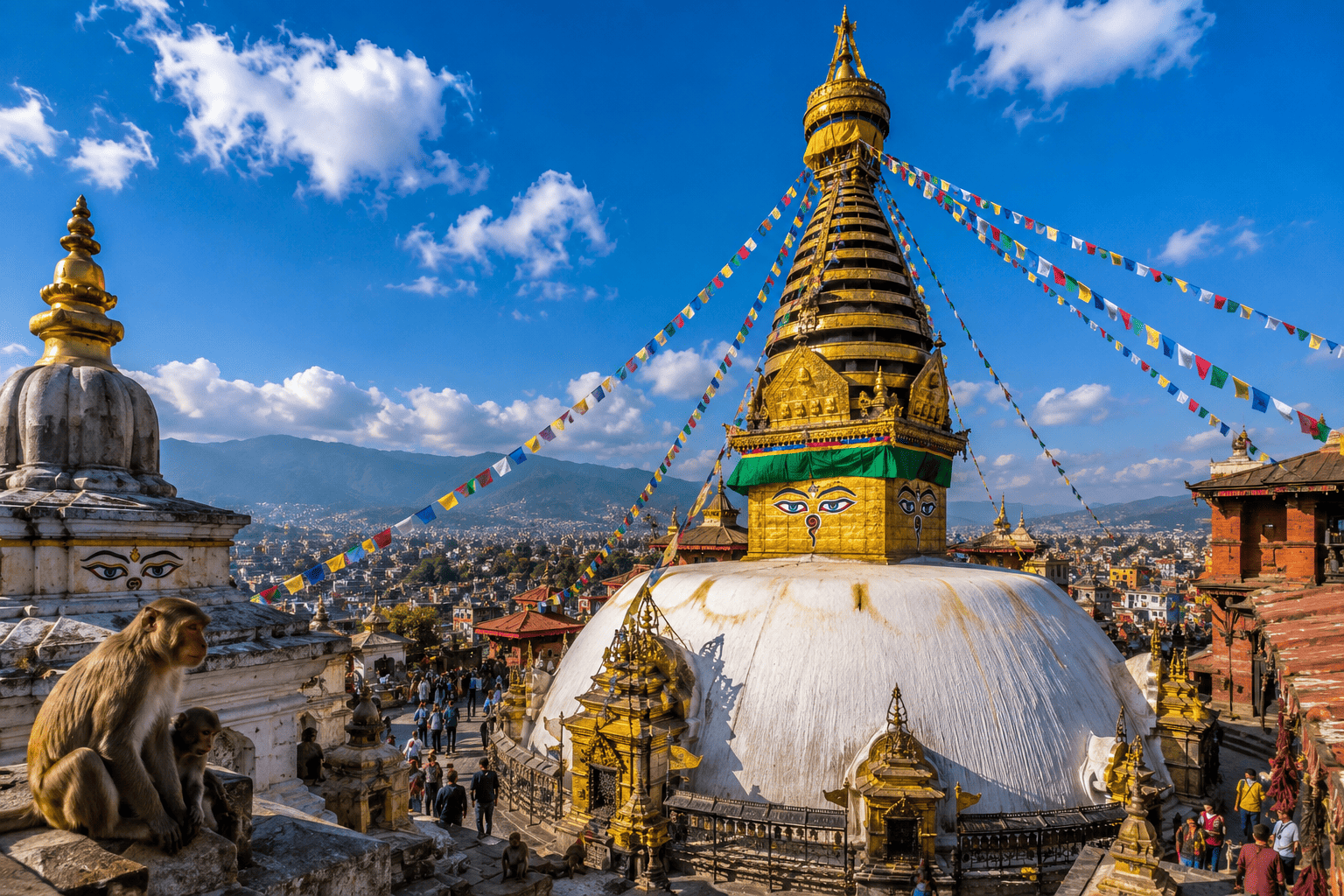
Swayambhunath (Monkey Temple): History, Religion & Travel Guide
22/08/2026
Swayambhunath sits on a hilltop on the western side of Kathmandu, and it's one of the oldest religious sites in the valley. Most people know it by its nickname, the Monkey Temple, because of the groups of monkeys that live around the complex - but there's a lot more to it than that.
A Bit of History
Swayambhunath is believed to be over 1,500 years old, and it's one of the most sacred Buddhist sites in Nepal, though Hindus worship here too - it's a good example of how closely Buddhism and Hinduism sit together in Nepali culture. According to local legend, the Kathmandu valley was once a giant lake, and the hill where the stupa now stands was the first piece of land to emerge from it.
The Stupa and Its Symbolism
The white dome is topped with a gold spire painted with the watchful eyes of Buddha, looking out in all four directions. These are often called the "Wisdom Eyes." Around the base, you'll find prayer wheels, smaller shrines, and Tibetan Buddhist monasteries, and the sound of chanting and bells is fairly constant throughout the day.
Getting There and Entry
Swayambhunath is about a 15-20 minute taxi ride from Thamel. There's a foreign visitor entry fee at the gate (this changes occasionally, so confirm the current rate when you arrive). You can reach the top either by climbing the long stairway on the eastern side - around 365 steps - or by taking the easier vehicle road up the back if you'd rather skip the climb.
The Monkeys
The monkeys around the temple are used to visitors, but they're still wild animals. Keep food out of sight, don't try to feed or touch them, and hold onto bags and loose items - they're known for grabbing anything that looks interesting.
Best Time to Visit
Early morning is a good time to go, both for cooler weather and to see local pilgrims doing their rounds. It also gives you clearer views over the Kathmandu valley before the haze builds up later in the day.
What to Wear and How to Behave
- Modest clothing is appropriate, as it's an active religious site.
- Walk clockwise around the stupa and shrines, following the direction locals use.
- Keep noise down near the monasteries, especially during prayer times.
Nearby Sites
Kathmandu Durbar Square isn't far and can be combined with a Swayambhunath visit for a half-day of sightseeing in the city.
Swayambhunath gives you both a great view over Kathmandu and a real look at how Buddhism and Hinduism blend together here. It's an easy half-day trip, but it's one that sticks with most visitors.
Frequently Asked Questions (FAQs)
Q: Why is Swayambhunath called the Monkey Temple?
A: Because of the large groups of monkeys that live around the temple complex - the nickname stuck with foreign visitors over time.
Q: Is Swayambhunath a Buddhist or Hindu site?
A: It's primarily a Buddhist site, but Hindus worship here as well, reflecting how the two religions coexist closely in Nepal.
Q: How do I get to the top of the hill?
A: Either by climbing the eastern stairway (around 365 steps) or by taking the vehicle road on the other side if you prefer not to climb.
Q: Is there an entry fee for foreign visitors?
A: Yes, there's a fee at the gate. It changes periodically, so it's worth confirming the current rate before you go.
Q: Are the monkeys dangerous?
A: They're generally used to visitors but are still wild — avoid feeding them and keep an eye on bags and food.
Q: How much time should I plan for a visit?
A: An hour or two is usually enough to see the stupa, shrines, and enjoy the valley views.
Q: Can I combine this with other sightseeing?
A: Yes, Kathmandu Durbar Square is nearby and often visited on the same day.