
Table of Contents
- Where Is Tengboche Monastery?
- Why Tengboche Monastery Is the Spiritual Heart of the Everest Region?
- A Brief History of Tengboche Monastery
- Daily Puja and Prayer Life at Tengboche Monastery
- What Visitors May Experience During a Puja
- A Quiet Break During the Everest Base Camp Trek
- Mani Rimdu Festival: Tengboche's Most Famous Celebration
- What Happens During Mani Rimdu?
- Why Trekkers Plan Their Journey Around Mani Rimdu
- Tengboche Monastery Visitor Etiquette
- Dress Respectfully
- Follow Instructions Before Entering
- Remove Your Shoes When Required
- Keep Your Voice Low
- Ask Before Taking Photographs
- Respect Religious Ceremonies
- How to Reach Tengboche Monastery
- The Mountains Around Tengboche
- Best Time to Visit Tengboche Monastery
- Spring
- Autumn
- Winter and Monsoon
- Why You Should Not Rush Through Tengboche
- Tengboche Monastery on Your Everest Base Camp Trek
- Frequently Asked Questions (FAQs)
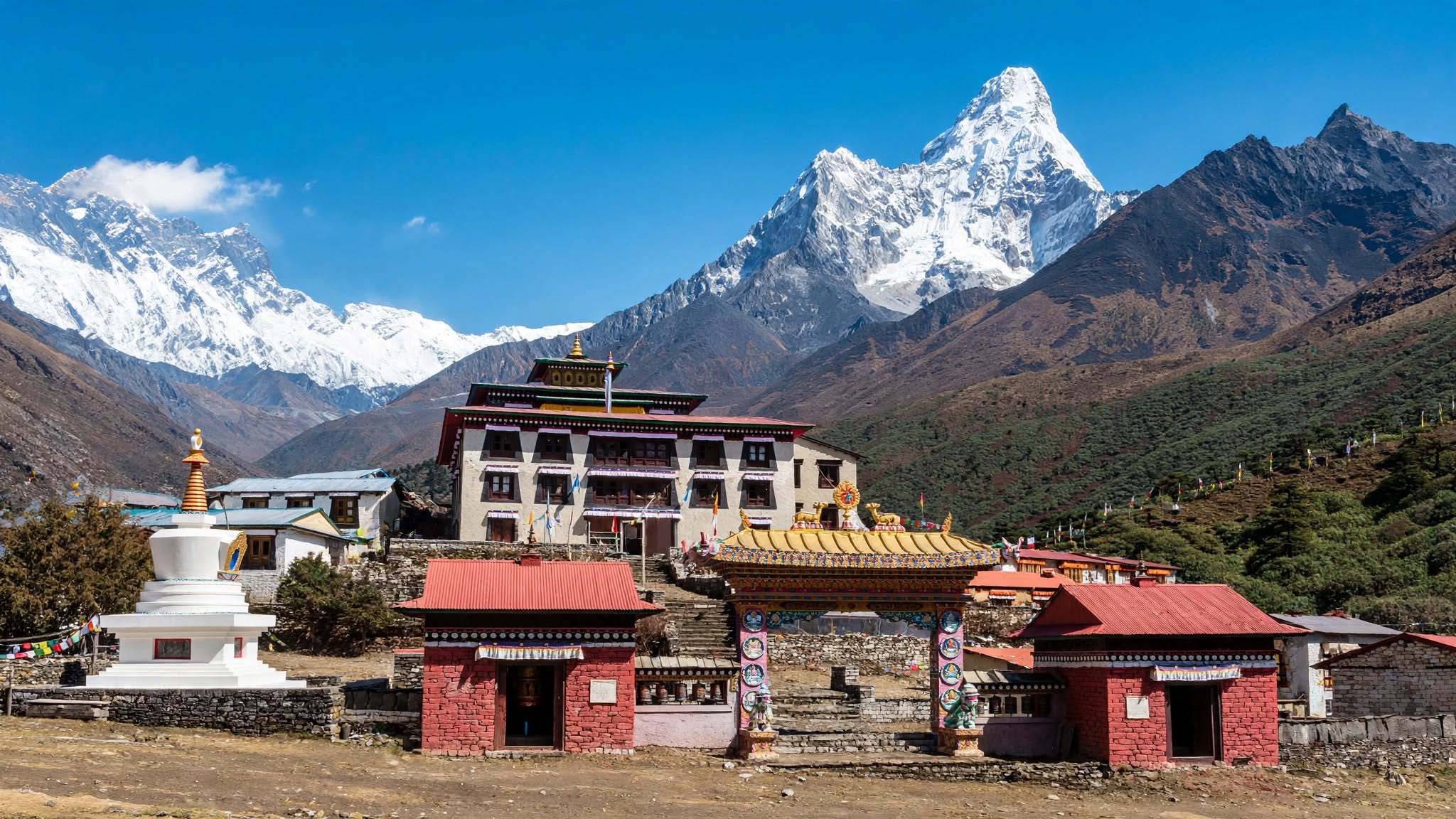
Tengboche Monastery: The Spiritual Heart of the Everest Region
03/09/2026
For many trekkers, Tengboche is one of the most memorable stops on the journey to Everest Base Camp. The views are spectacular. Ama Dablam rises dramatically in the distance, while Everest and Lhotse can also be seen from the surrounding landscape.
However, Tengboche offers much more than a beautiful
Himalayan viewpoint. At the heart of this small settlement stands Tengboche
Monastery, one of the most important Buddhist centers in the Khumbu region.
Located at approximately 3,867 meters on the main trekking route between Lukla
and Everest Base Camp, the monastery has long played an important role in the
spiritual and cultural life of the Sherpa community.
For trekkers walking toward Everest Base Camp, Tengboche
provides a chance to slow down and experience another side of the Himalayas.
The sound of prayer chants, the sight of prayer flags moving in the mountain
wind, and the presence of monks and pilgrims create an atmosphere that feels
very different from a typical trekking stop.
Today we will explore the history, spiritual importance,
daily prayer life, Mani Rimdu festival, visitor etiquette, and role of
Tengboche Monastery in the Everest Base Camp Trek.
Where Is Tengboche Monastery?
Tengboche Monastery is located in Nepal's Khumbu region
within the Everest region. It sits on the popular trekking route to Everest
Base Camp and usually becomes an important overnight stop after Namche Bazaar.
The monastery stands on a high ridge surrounded by Himalayan
forests and mountains. From the area around Tengboche, trekkers can enjoy
impressive views of several famous peaks, including Everest, Lhotse, and Ama
Dablam.
For many visitors, the dramatic view of Ama Dablam creates
their first unforgettable memory of Tengboche. Yet the monastery itself remains
the true cultural and spiritual center of the village.
If you are planning an Everest Base Camp Trek, taking
time to understand Tengboche can make the journey much more meaningful.
Why Tengboche Monastery Is the Spiritual Heart of the Everest Region?
The Everest region is famous around the world for mountains
and mountaineering. However, the Khumbu is also home to a deeply rooted Sherpa
Buddhist culture.
Tengboche Monastery plays a leading role in that spiritual
landscape. The monastery serves as an important Buddhist center where monks
live, study, pray, and perform religious ceremonies. It also welcomes pilgrims,
local communities, climbers, and trekkers passing through the region. Nepal
Tourism Board describes Tengboche as a leading Buddhist center in the Khumbu
and notes the monastery's importance to pilgrims, mountaineers, and travelers.
For Sherpa communities, the mountains are not simply
physical landscapes. They also carry cultural and spiritual meaning. Therefore,
visiting Tengboche offers trekkers an opportunity to understand the Everest
region beyond trekking distances, altitude, and mountain views.
This is one reason why Tengboche Monastery is often
remembered as one of the most meaningful stops during an Everest journey.
A Brief History of Tengboche Monastery
Tengboche Monastery has experienced both destruction and
renewal. The monastery was established in the twentieth century and became an
important religious center for the Khumbu region. Over the years, the local
Sherpa community played an important role in supporting and rebuilding it.
The main temple suffered major destruction during the 1934
earthquake. The Khumbu community later rebuilt the monastery with donations and
local support. Then, in 1989, a devastating fire destroyed the monastery again.
Once more, the community rebuilt it.
This history gives Tengboche another layer of meaning. The
monastery seen by trekkers today represents not only Buddhist faith but also
the resilience and determination of the local community. Its survival reflects
the strong connection between the people of Khumbu and their spiritual
traditions.
Daily Puja and Prayer Life at Tengboche Monastery
One of the most meaningful experiences for visitors can be
observing the spiritual atmosphere surrounding the monastery. A puja is
a religious act of worship or prayer. In Buddhist communities, prayer
ceremonies can include chanting, ritual instruments, offerings, and other
religious practices.
The atmosphere during prayer time can feel completely
different from the busy trekking trails outside. Trekkers may spend much of the
day walking through forests, crossing suspension bridges, and climbing steep
Himalayan trails. Then, after reaching Tengboche, they enter an environment
shaped by silence, chanting, prayer, and reflection. This contrast is part of
what makes Tengboche special.
What Visitors May Experience During a Puja
The exact experience can depend on the day, ceremony, and
monastery schedule. However, visitors may hear monks chanting prayers and see
religious rituals taking place within the monastery.
For first-time visitors, the experience can be both peaceful
and unfamiliar. You do not need to understand every word of a prayer to
appreciate its importance. Instead, take time to observe quietly and
respectfully.
Avoid treating a prayer ceremony as a tourist performance.
Remember that monks and local people participate in these rituals as part of
their living faith. This simple understanding can help visitors experience
Tengboche Monastery with greater respect.
A Quiet Break During the Everest Base Camp Trek
Trekking to Everest Base Camp often pushes people outside
their normal routines. Long walking days, cold temperatures, changing weather,
and increasing altitude demand both physical and mental energy.
Tengboche offers a natural moment to pause. Instead of
rushing through the village, spend time observing the monastery and the
surrounding environment. For many trekkers, this stop becomes an opportunity to
reflect before continuing toward higher places such as Dingboche, Lobuche,
Gorak Shep, and Everest Base Camp.
Mani Rimdu Festival: Tengboche's Most Famous Celebration
The Mani Rimdu festival is one of the most important
cultural and religious events associated with the Khumbu region.
The festival takes place at monasteries in the region,
including Tengboche Monastery, and holds deep importance within Sherpa Buddhist
culture. UNESCO describes Mani Rimdu as one of the most important monastery
festivals among Sherpa communities living in the Khumbu region.
The celebration includes religious ceremonies, prayers,
blessings, ritual practices, and famous masked dances. For many trekkers,
witnessing Mani Rimdu becomes a rare opportunity to experience a living
Himalayan tradition rather than simply reading about it in a travel guide.
What Happens During Mani Rimdu?
Mani Rimdu involves several stages of religious practice and
ceremony. According to UNESCO's description of the tradition, rituals can
include meditation, the creation of a sand mandala, prayer ceremonies,
blessings, and masked dances performed by monks.
The masked dances are among the most visually striking parts
of the celebration. However, visitors should remember that these dances are not
simply entertainment. They form part of a religious tradition with deep
spiritual meaning.
For this reason, travelers should observe respectfully and
follow instructions from the monastery and local organizers.
Why Trekkers Plan Their Journey Around Mani Rimdu
Some visitors plan their Everest trekking trip specifically
to experience the festival. Tengboche is already an important stop on the
Everest Base Camp route. Therefore, attending Mani Rimdu can add a powerful
cultural experience to a trekking journey.
Nepal Tourism Board notes that trekkers often plan their
visits around the festival and that visitors can take part in the celebrations.
However, festival dates and schedules can vary according to religious calendars
and local arrangements. Therefore, trekkers should confirm the dates with a
reliable local trekking company before making travel plans.
Tengboche Monastery Visitor Etiquette
Tengboche Monastery is an active religious site. Therefore,
respectful behavior matters. Understanding basic cultural etiquette can help
visitors avoid disturbing monks, worshippers, or religious ceremonies.
Dress Respectfully
Wear modest and appropriate clothing when visiting the
monastery. Although trekkers usually wear practical trekking clothes, avoid
clothing that may feel inappropriate inside a religious space.
Follow Instructions Before Entering
Certain areas may have specific rules for visitors. Always
follow signs and instructions from monastery staff or local guides. If you are
unsure whether you can enter a particular area, ask before entering.
Remove Your Shoes When Required
In Nepal, removing shoes before entering a place of worship
or a home is a common sign of respect. Follow the rules provided at the
monastery and observe what local visitors and guides do.
Keep Your Voice Low
Avoid loud conversations inside or near prayer areas. Monasteries
are places for prayer and reflection. A quiet voice shows respect for people
participating in religious activities.
Ask Before Taking Photographs
Photography rules can vary depending on the location and
ceremony. Do not assume that you can photograph monks, worshippers, religious
objects, or rituals. Ask for permission when necessary and follow all
photography restrictions. Nepal Tourism Board also recommends seeking
permission before photographing people or objects to avoid conflict.
Respect Religious Ceremonies
If a puja or other ceremony is taking place, do not walk
around unnecessarily, block people's view, or interrupt the event. Observe
quietly and remember that you are a guest in an active religious space.
How to Reach Tengboche Monastery
Most trekkers reach Tengboche as part of the classic Everest
Base Camp Trek. The journey generally begins with travel to Lukla, followed by
trekking through the Dudh Koshi Valley toward Namche Bazaar. From Namche, the
route continues through forests and mountain trails before reaching Tengboche.
Nepal Tourism Board identifies Tengboche as a major stop on
the main Everest trekking route and notes that it can be reached by trekking
from Lukla.
The trek from Namche Bazaar to Tengboche includes both
downhill and uphill sections. Although the distance may not seem extremely
long, the route can feel demanding because of elevation, terrain, and the long
climb toward Tengboche.
Therefore, trek at a comfortable pace and stay properly
hydrated. After Tengboche, many Everest Base Camp trekkers continue toward
Dingboche and then move gradually higher into the Khumbu.
The Mountains Around Tengboche
Tengboche offers some of the most famous mountain scenery in
the Everest region. Ama Dablam often becomes the center of attention because of
its striking shape and dramatic position near the monastery. The wider
landscape also offers views toward Everest and Lhotse.
However, the mountains and monastery create a more
meaningful experience when viewed together. The landscape represents the
natural beauty of the Himalayas, while the monastery reflects the culture and
spiritual traditions that have developed within this high mountain environment.
That combination makes Tengboche more than a photography
stop. It makes Tengboche one of the cultural highlights of the Everest Base
Camp Trek.
Best Time to Visit Tengboche Monastery
Most trekkers visit Tengboche during the popular spring and
autumn trekking seasons.
Spring
Spring generally brings active trekking trails, comfortable
daytime conditions, and colorful natural landscapes. Rhododendrons may add
color to lower sections of the Everest trekking route.
Autumn
Autumn is popular because of generally stable weather
conditions and clear mountain views. This season can also be particularly
attractive for travelers interested in cultural events in the Everest region,
including Mani Rimdu. However, travelers should always confirm festival dates
before booking because religious calendars and local schedules can affect the
exact timing.
Winter and Monsoon
Winter brings colder conditions and fewer trekkers. Monsoon
brings more rain, clouds, and challenging trail conditions.Both seasons can
still offer unique experiences, but trekkers should prepare carefully.
Why You Should Not Rush Through Tengboche
Many trekkers follow a fixed itinerary. As a result, they
sometimes treat Tengboche as only another overnight stop before moving toward
Everest Base Camp.
That approach can cause travelers to miss one of the most
meaningful places in the Khumbu. Take time to visit the monastery. Learn about
the local culture. Observe respectfully. Listen to the sounds of prayer and
notice how different Tengboche feels from the busy trekking trail.
Everest Base Camp may be the main destination, but the
journey itself creates many of the strongest memories. Tengboche Monastery is
one of those places.
It reminds trekkers that the Everest region is not defined
only by the world's highest mountains. It is also shaped by communities,
traditions, faith, and generations of people who have lived among these
mountains.
Tengboche Monastery on Your Everest Base Camp Trek
A well-planned Everest Base Camp Trek should give you enough
time to experience the Khumbu rather than simply rush from one destination to
another.
At Nepal Boundary Trekking Agency, we believe that trekking
becomes more meaningful when travelers understand the places they visit. Tengboche
is an excellent example.
You can admire Ama Dablam, explore the Everest region, and
continue toward Everest Base Camp. At the same time, you can also learn about
Sherpa culture and experience one of the region's most important Buddhist
centers.
When planning your trek, consider asking your guide about
Tengboche Monastery, local customs, and current prayer or visiting
arrangements. A knowledgeable local guide can help you understand the
difference between simply seeing a place and truly experiencing it.
Frequently Asked Questions (FAQs)
Q: Where is Tengboche Monastery located?
A: Tengboche Monastery is located in the Khumbu region of Nepal on the main trekking route to Everest Base Camp. It sits at an altitude of approximately 3,867 meters.
Q: Why is Tengboche Monastery important?
A: Tengboche Monastery is an important Buddhist center in the Khumbu region and holds cultural and spiritual significance for Sherpa communities, pilgrims, climbers, and trekkers.
Q: Can tourists visit Tengboche Monastery?
A: Yes, visitors can visit Tengboche Monastery. However, they should follow monastery rules, respect religious ceremonies, and follow any restrictions related to photography or access.
Q: What is Mani Rimdu?
A: Mani Rimdu is an important monastery festival celebrated within the Sherpa Buddhist tradition of the Khumbu region. The festival includes religious rituals, prayers, blessings, and famous masked dances.
Q: When is the Mani Rimdu festival held at Tengboche?
A: The festival is generally associated with the autumn period, but exact dates can vary according to the religious calendar and local schedule. Confirm current dates before planning your trek.
Q: Can I take photos inside Tengboche Monastery?
A: Photography rules may vary. Always check the current rules and ask for permission when photographing people, religious objects, or ceremonies.
Q: How long does it take to reach Tengboche from Namche Bazaar?
A: Tengboche is commonly reached during the next trekking stage after Namche Bazaar. Walking time can vary depending on fitness, weather, trail conditions, and trekking pace. Tengboche Monastery Nepal, Tengboche Monastery Everest Base Camp Trek, Tengboche Monastery guide, Tengboche Monastery puja, Mani Rimdu Festival, Tengboche Monastery etiquette, Buddhist monastery in Khumbu, Tengboche village, Everest region culture, Sherpa Buddhism